Sunday, April 09, 2006

On Kiran Nagarkar's God's Little Soldier

[A version of this piece appears today in the Indian Express]

It is not unusual or surprising that Kiran Nagarkar has chosen in Zia Khan, the protagonist of his new novel God's Little Soldier, a man who is self-involved, confused, violent, spiteful, and deluded. Excellent novels have been written about such characters. Indeed, what could be more fascinating than the story of a man who has to deal with the world but cannot see clearly and is shackled by his own failings?

What is unusual, however, is the extent to which the narratorial perspective of God's Little Soldier exists in faithful servitude to the worldview of its central character. Instead of summoning sober intelligence to balance out Zia's vast madness, Nagarkar's narration aggrandises him even further, echoing Zia's slapdash thinking and love of anarchy with a linguistic sloppiness and a bogus grandiosity of its own. Zia is a terrorist, and God's Little Soldier itself enacts a kind of literary terrorism, gleefully blowing up every literary convention and nicety over more than five hundred pages at once tedious and alarming.

Zia's story is credible for only a fraction of this book. This is the early section where Nagarkar takes us through his childhood, his immersion in Islamic doctrine at the urging of his devout aunt Zubeida, and his conviction as he grows up that he is destined to be "God's little soldier", a defender of Islamic values in a degenerate and immoral world. Here one can take genuine pleasure in Nagarkar's tracking of his protagonist. "The power of mass prayer was a revelation to Zia," he writes of Zia's first visit to the mosque by himself. "He discovered that his prayers had more body and weight and rapture when he was among the believers in the mosque." One understands why Zia might want to do something to shake up the world.

But how he shakes it up. Nagarkar's Zia is a Superman. He is a mathematical genius who nevertheless has no great love for mathematics; he has three girlfriends at his posh school but is indifferent towards all of them; he is petty in his dealings with family members yet they all, like Nagarkar, love him to bits. As a student in Cambridge, he decides to assassinate Salman Rushdie, the "obstreperous Midnight's Child" and the scourge of Islam, and hunts him down, only to be stymied at the last moment; this makes him flee the country. Later he becomes a guerilla in Afghanistan and Kashmir.

In the second part of the novel, we find that Zia has renounced his precious Islamic faith to become the zealous Brother Lucens, a monk at an abbey. Here his activities include making massive profits on the stock market, running a campaign against abortion, and setting up an organisation called The Guardian Angels dedicated to nothing less than the moral rejuvenation of godless, sinful America. (It is worth noting that while Nagarkar mocks capitalism, his narrative is steeped with gratuitous references to foreign brand names, as if to establish that he really knows his US and his UK.)

And in the third part of the novel we find that Lucens has taken up with a Hindu godman, Shakta Muni, and has taken on a new name, Tejas Nirantar. Zia is infinitely elastic; at one point Nagarkar even calls him - whether in seriousness or in jest it is hard to say, as Nagarkar seems to believe all seriousness must also be jest - Zia-Lucens-Nirantar, as if to suggest there is nothing like a stable Zia but only a succession of Zia avatars. Zia has only the appearance of independence; in reality he is a hostage - God's little soldier - to his whimsical creator, who makes him whatever he wants him to be.

Worst of all is that this tall tale is narrated in Nagarkar's new wild-eyed vagabond prose, so different from that of Cuckold. His protagonist wants to assassinate Rushdie, and Nagarkar himself sounds mostly like he has the one-point aim of parodying the work of "Midnight's Child". One of the reasons that God's Little Soldier is so long is that a great deal of the time the narrator appears to be working only for the pleasure of the sound of his own voice. Nagarkar needs not the slightest excuse to lurch into verbal excess.

Here is how a cold wind blows around Zia: "It tore at him, slipped inside his trouser legs, groped at his crotch, ferreted in his armpits and careened into his lungs." This establishes only that the writer knows many verbs and body parts; as a sentence in a novel it is risible. There is nothing very significant about the wind groping at Zia's crotch; one loses faith in a writer if his powers of discrimination are so poor and his emphases so illogical. Here is the best analogy Nagarkar can find to dramatise a particular mental state of his protagonist: "Zia became a rod of uranium-238, inflammable with self-loathing and spite." Elsewhere Nagarkar provides, "There was a manhole in his soul, and he had fallen into it." Who can countenance work like this?

Nagarkar's shopworn and tacky language is paralleled by a moral flabbiness - in fact he seems determinedly obtuse, as if to affect a kind of unorthodox bravura. Zia is a monster, but the only person with the courage to criticise him is his brother Amanat (whose writing, as quoted by Nagarkar, accounts for most of the book's sane moments). Nagarkar's narration itself records Zia's thoughts and activities without the least trace of irony. At several points he seems desperate to bat for his protagonist, to explain away his improbable deeds.

At one point Zia comes up with a business plan to brings funds into Concord-Ashton, the base of The Guardian Angels ("Tempt them with tax holidays and benefits, incentives, competitive insurance packages….Yes, like the Mafia dons, let's make them an offer they can't refuse."). This is only one of many instances when Nagarkar sounds like nothing so much as a hack brochure writer. And Nagarkar carries on the narration after Zia's speech: "You may call it a juvenile stunt, but it worked. Word about the tax holiday and other benefits got around…" "You may call it a juvenile stunt"? Why is Nagarkar so worried here about what the reader is thinking?

Late in the novel, when Zia embarks upon his grand venture to reform the United States, Nagarkar explains: "What was needed was to turn the world upside down. The very nature of the value system in the country had to be changed.The US had to be taken back, by force if necessary, to a state of innocence and grace." The "value system" indeed! "By force if necessary"! At such points we find it is not the novelist who reveals something about the character but the character who reveals something about the novelist.

Although God's Little Soldier purports to deal with questions of faith, and hollers out the names of Allah and Jesus at every opportunity, what it offers through the study of its cartoonish protagonist is really a parody of the life of faith, even militant faith. Its main quality is that it is a book greatly in love with the idea of its own cleverness; the insight it offers into the large themes it almost programmatically embraces is negligible. This preening and shabby novel exhausts all negative superlatives, and deserves to be sold with the novel-reader's equivalent of the kind of warning found on cigarette cartons and whisky bottles.

Some links: Nagarkar offers an interpretation of his protagonist ("Zia is a good man gone really bad...") consistent with the way he treats him in his novel in a pre-publication interview here, and makes some more bizarre claims here ("[Zia's] intolerance makes me examine my own prejudices and reflect that maybe I'm intolerant as well – towards intolerant people!").

And here are two older pieces on novels that address questions of faith far more sensitively than God's Little Soldier - Naguib Mahfouz's Akhenaten, Dweller in Truth and Leila Aboulela's Minaret.

And, since Salman Rushdie appears so often in Nagarkar's novel, here is a recent piece by Rushdie written the 25th anniversary of the publication of Midnight's Children. Called "The Birth Pangs of Midnight's Children", it is a striking account of how that landmark novel came into being. In the passage I cite below, note in particular not just Rushdie's acknowledgement of a debt to Charles Dickens but also his acute portrait (Rushdie has always been an exceptional reader) of Dickens's work:

In the end I had two titles and couldn’t choose between them: Midnight’s Children and Children of Midnight. I typed them out one after the other, over and over, and then all at once I understood that there was no contest, that Children of Midnight was a banal title and Midnight’s Children a good one. To know the title was also to understand the book better, and after that it became easier, a little easier, to write. I have written and spoken elsewhere about my debt to the oral narrative traditions of India; also to those great Indian novelists Jane Austen and Charles Dickens — Austen for her portraits of brilliant women caged by the social convention of their time, women whose Indian counterparts I knew well; Dickens for his great, rotting, Bombay-like city, and his ability to root his larger-than-life characters and surrealist imagery in a sharply observed, almost hyper-realistic background, out of which the comic and fantastic elements of his work seemed to
grow organically, becoming intensifications of, and not escapes from, the real world.
Also, Vikram Doctor's piece in the Economic Times last week on Midnight's Children and the city that inspired it can be found here (link via Kitabkhana).

Thursday, April 06, 2006

The supremely light feet of Suresh Raina

As the cricket season is due to end shortly, I'm making up for some slack months by writing a few pieces on players who've caught my eye. I've put up a post today on Different Strokes on the rising star of Indian batting. It's called "The supremely light feet of Suresh Raina", and here's an excerpt:

A great many of the batting artists of our age - Virender Sehwag, Damien Martyn, VVS Laxman - bat in a way that makes us admire the work of their hands rather than their feet. Batting was traditionally was thought to begin with, and indeed rest upon, a batsman's footwork. But the thickness and striking force of modern-day bats sometimes makes precise footwork redundant. It has been a pleasure, then, to watch the two splendid half-centuries made over the last week at Faridabad and at Goa by young Suresh Raina, and to observe how much his batting owes to his supremely light feet.
Also coming up on the Middle Stage over the next two weeks: pieces on Kiran Nagarkar's new novel God's Little Soldier, Hamid Ismailov's The Railway, and Alberto Manguel's With Borges.

Friday, March 31, 2006

On the bowling of Ramesh Powar

I have a piece on the maverick Indian off-spin bowler Ramesh Powar up on the cricket blog Different Strokes today. Here's the first paragraph:
Ramesh Powar is that rare thing: the genuinely slow bowler, someone whose bowling never quite "arrives". One knows that Powar is a tease even before he rolls his arm over: the substantial Powar waistline, the zany red Powar sunglasses, the glimmer of a Powar grin that appears on the ten-step Powar gambol to the wicket, all convey to the batsman the air of a seriously unserious cricketer having a bit of a lark. But there is no harm in all this. Spin bowling, after all, is basically about subterfuge.

The whole piece is here.

Wednesday, March 29, 2006

Antonio Machado's eyes

If most people in the English-speaking world are acquainted the work of a Spanish poet in translation at all, then that work is almost always that of Federico García Lorca, also the greatest dramatist of twentieth-century Spain (Blood Wedding, The House of Bernarda Alba). Like Amrita Sher-Gil, the subject of my last post, García Lorca led a flamboyant and colourful life and died young, and the legend of his life has to some extent ensured that his work is not forgotten.

But a Spanish poet of equal (if not greater) distinction and a curious charm is Antonio Machado (1885-1939), a slightly older and definitely more old-fashioned poet than Garcia Lorca. Their lives could not have been more contrasting. Lorca achieved early fame, toured the world, won notoriety for his homosexuality, and was murdered by political opponents at the start of the Spanish civil war (an irony of which is that this event, reported around the world, also secured his reputation). Machado's life was a placid unrippled pool by comparison - he lived all his life in small towns in the province of Castile, served for decades as a schoolteacher, and journeyed out of Spain only three times in his life. One is tempted to draw a comparison between the Indian writer in English, often earning large advances and moving from one world capital to another, and writers in the vernacular, often working away quietly and in relative anonymity for decades before they have a chance of even a wider Indian readership.

But to return to Machado - it was not that his life had no drama to it, it was only that it was a more private drama. Just as Dante had Beatrice, so Machado had his own love the image of whom he carried always in his heart, Leonor. This was a girl nine years younger to him - the daughter of his landlady in Soria, a town where he was then teaching - whom he married when she was fifteen, and who died of tubercolosis when she was twenty-four. Machado never remarried, and many of his poems express the sense of the transient nature of all that in life that makes us happy.

Consider the complex play of feelings in one of Machado's best poems, "The Eyes" (here in Alan S. Trueblood's translation):


The Eyes

I
When his beloved died
he thought he'd just grow old,
shutting himself in the house
alone, with memories and the mirror
that she had looked in one bright day.
Like gold in the miser's chest,
he thought he'd keep all yesterday
in the clear mirror intact.
For him time's flow would cease.

II
But after a year had passed,
he began to wonder about her eyes:
"Were they brown or black? Or green? ...Or grey?
What were they like? Good God! I can't recall..."

III
One day in spring he left the house
and took his double mourning down the street
in silence, his heart tight shut...
In the dim hollow of a window
he caught a flash of eyes. He lowered his...
and walked right on...Like those!
The man wants the memory of his beloved to be undimmed and untarnished, to stop time at the point that she left him. But time hurries on, and despite his best efforts she begins to recede from his memory. The conclusion of the poem, in which he walks down the street and sees a pair of eyes "like those", beautifully expresses his double sense of wanting to be true to someone's memory but also his yearning to love again. Are the eyes of the woman in the window really "like those"? They can hardly be, but immediate experience is always more powerful than memory, and something always arrives to fill in the gap for that which we cannot recover. The poem is simultaneously an elegy to a a person lost forever and a recognition of the truth that ultimately we have no choice than to live in the present. Note Machado's marvellous use of ellipses to convey the jagged rush of thought - "He lowered his…/and walked right on…Like those!"

Machado was the best kind of poet, able to explore the most serious concerns while also retaining an ability to laugh at himself. Here is the poem "Last Night As I Was Sleeping", in a translation by the poet Robert Bly:

Last Night As I Was Sleeping

Last night as I was sleeping,
I dreamt - marvellous error! -
that a spring was breaking
out in my heart
I said: Along which secret aqueduct
Oh water, are you coming to me,
water of a new life
that I have never drunk?

Last night as I was sleeping,
I dreamt - marvellous error! -
that I had a beehive
here inside my heart.
And the golden bees
were making white combs
and sweet honey
from my old failures.

Last night as I was sleeping,
I dreamt - marvellous error! -
that a fiery sun was giving
light inside my heart.
It was fiery because I felt,
warmth as from a hearth,
and sun because it gave light
and brought tears to my eyes.

Last night as I was sleeping,
I dreamt - marvellous error! -
That it was God I had
here inside my heart.
That repeated interjection - "marvellous error!" - transforms the meaning of the whole poem. Paradoxically the speaker's words appears more vivid, more true, precisely because he asks cleverly if they are only dreams with no significance to real life.

Here are some other poems by Machado: "Has My Heart Gone To Sleep?", "Evening Rainbow", "Portrait" ("In my dealings with women I’ve been no Don Juan/(I could never be bothered to dress for the part),/but I received the dart allotted me by Cupid/and have enjoyed all the comforts women bring") and a selection of translations by AS Kline.

A good essay on Machado's poetry by William Zander can be found here. And here is a piece by David Grayson on Garcia Lorca's influential theory of the duende - that mysterious power "which everyone senses and no philosopher explains".

Some old Middle Stage posts about other poets: "Constantine Cavafy's City", "Chess with Jorge Luis Borges", "Nazim Hikmet in prison", and "The despair of Attila Jozsef".

And one other post with some relation to "The Eyes" - "Sirshendu Mukhopadhyay's language of love".

Wednesday, March 22, 2006

Amrita Sher-Gil for a short time

In the preface to her book Amrita Sher-Gil: A Life, Yashodhara Dalmia says it is her aim to show, through close attention to Sher-Gil's life, "how genius is not born but made, indeed self-made". This is an admirable way of approaching the life of an artist, and Amrita Sher-Gil contains a great many rich and beautiful passages that show us how Sher-Gil, rapt in her own talent and hungry for a way forward, turned talent into genius by learning from both art and life.

Sher-Gil (1913-41) was a woman well in advance of her time. Half-Indian and half-Hungarian, of aristocratic lineage, she was born in Budapest and brought up in the Hungarian capital and in Shimla. She studied art in Paris in the wake of high modernism - unusually, her family relocated to Paris just so that she could make good on her talent - and reached a level of considerable technical accomplishment while still in her teens.

Her youthful work, already highly proficient, blossomed out in several directions upon her return to India for good in 1934 at the age of 21. Travelling around the country and taking inspiration from indigenous traditions - the frescoes at Ajanta and other sites in south India, Mughal miniatures, paintings of the Basohli school - she produced through her twenties works of haunting beauty and striking, if not always successful, technical innovation. Sher-Gil's life was just as vivid: she had many lovers, friends and enemies, married her first cousin, and died tragically young at the age of 28, possibly as the result of a failed abortion.

Although her work was very varied, Sher-Gil's women are of special interest. Dalmia quotes an entry from Sher-Gil's diary when she was just twelve, about a child bride, noting the pathos of the little girl sitting silently in a corner, a "helpless toy" in the hands of those responsible for her well-being. The women of Sher-Gil's paintings are grave, although they often seem tremulous with suppressed feeling. One of her earliest successes, made during her Paris years, was The Professional Model (1933). The woman is ostensibly independent, but her slouched posture, sagging breasts hanging over a pouchy stomach, and plaintive eyes show that she too is helpless and pathetic in her own way - she does not even bother to strike a pose.

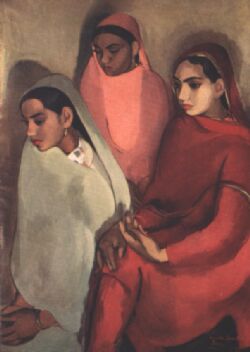
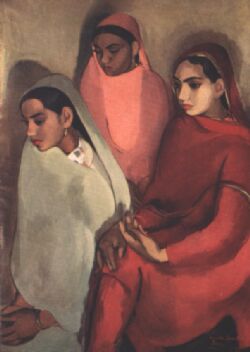
Two years later, after her return to India, Sher-Gil made Group of Three Girls (at right) - the girls very still from foreground to background, their eyes lowered or averted, each lost in thought, a group and yet not a group, the light sober and low, the heavy colours of the clothes, the scene giving off a gloominess, a sense of something cramped and silent. Her two major works - Bride's Toilet and Brahmacharis, both made in 1937 - also convey this air of quiescence and melancholy. Like many artists, Sher-Gil appears to have found images of Indian life constricted by poverty and oppressive social strictures morally disturbing but aesthetically striking. In her early years in India she writes often of wanting to paint "those images of infinite submission and patience".

"Those images of infinite submission and patience" - three decades later, another young artist with roots in India would arrive in the country of his forebears, and be struck at once by just this aspect of the country. This is VS Naipaul on page two of An Area of Darkness (1964), describing how he is received aboard ship at Bombay by the Goan guide Coelho. Naipaul and Coelho speak roughly as equals, but there soon appears a third presence - "Coelho's man" - who appears to be a denizen of a different universe:
[Coelho] clapped his hands and at once a barefooted man, stunted and bony, appeared and began to take our suitcases away. He had been waiting, unseen, unheard, ever since Coelho came aboard. Carrying only the doll and the bag containing the bottles, we climbed down into the launch. Coelho's man stowed away the suitcases. Then he squatted on the floor, as though to squeeze himself into the smallest possible space, as though to apologize for his presence, even at the exposed stern, in the launch in which his master was travelling.
The best thing about Amrita Sher-Gil is that Sher-Gil is not just spoken about on these pages; she also does a lot of speaking herself (and therefore seems not dead, and memorialized, but still alive and thriving, as she is in one sense). Sher-Gil shared a lively correspondence with several people, including her lover and eventual husband Victor Egan and the Bombay-based art critic Karl Khandalavala, who was a great champion of her work and wrote a book about her shortly after her death. Dalmia quotes liberally from her correspondence, showing what an adept interpreter she was not just of Gauguin (whom she admired greatly), Basohli paintings or the Ajanta frescoes but also of her own work, both the intent with which she began and the actual strengths and weaknesses of the result. In fact, she was not shy of speaking her mind on any subject. Here she is in a talk delivered at Lahore in 1937, castigating Indian film-makers for presenting in their work only the make-believe world of the studio:

When the people who are responsible for the production of films in this country discover the rich beauty of a blade of corn, the rough unctuous texture of the earth, the rhythm of movement found in massive bullock drawing ploughs…and learn to discard the synthetic substitute of the studio they will do great things. […] I would like them to notice the undulating lines in South Indian sarees and the beauty of the thin peasants in their strange straight dhoties, to notice the glossy beauty of the rice fields and the shimmer of dust rising in the sun, to focus their lens on small objects and invest them with a charm and a significance that surpasses all pomp and tinsel of the ancient courts or Indra's heaven.
This paean to natural beauty has an almost direct echo in a lyrical passage from "My Life, My Work", a lecture delivered by Satyajit Ray in 1982, in which he describes (in Gopa Majumdar's translation) how he made the move out from the controlled conditions of studio shooting and attempted to grapple with the problems of capturing sights and sounds on location:

If the books on film-making helped, it was only in a general sort of way. For instance, none of them tells you how to handle an actor who has never faced the camera before. You had to devise your own method. You had to find out by yourself how to catch the hushed stillness of dusk in a Bengali village, when the wind drops and turns the ponds into sheets of glass, dappled by he leaves of shaluk and shapla, and the smoke from ovens settles in wispy trails over the landscape, and the plaintive blows on conch shells from homes far and near are joined by the chorus of crickets, which rises as the night falls, until all one sees are the stars in the sky, and the stars that blink and swirl in the thickets.
In a letter written in 1931 Sher-Gil declares: "I will enjoy my beauty because it is given for a short time and joy is a short-lived thing." She was not to know that life itself was given to her "for a short time". But the colour and pitch of that short, incandescent span of years emerges vividly in Amrita Sher-Gil: A Life. The logical sequel to this book would be for Dalmia to now bring out a collection of Sher-Gil's radiant letters and essays.

Sher-Gil's painting Village Scene recently sold for Rs. 6.9 crore at an auction in New Delhi. Here is Dalmia's piece on that event, and here is an essay by Karl Khandalavala on Sher-Gil's work. Several Sher-Gil paintings are part of the collection of the National Gallery of Modern Art in Delhi.

And here are some more exceptional essays on artworks and artists: the great art critic Robert Hughes on Rembrandt, Sebastian Smee again on Rembrandt (it was Rembrandt's 400th birth anniversary recently, and discussion of his famous self-portraits also appears in Dalmia's book), Rochelle Gurstein on the Mona Lisa, and John Updike on Goya. And lastly this fun essay by Jacob Weisberg: "Matisse vs. Picasso: You're Either One of the Other", and an essay by Pankaj Mishra on Naipaul's An Area of Darkness.

Friday, March 17, 2006

Adam Kirsch, the Renaissance, and Garcia Marquez

In a recent essay called "Rereading the Renaissance" the literary critic Adam Kirsch says of the field of studies known as the humanities:

The only thing most teachers and students of the humanities agree on, it often seems, is that these are troubled times for their field. For a whole variety of reasons—social, intellectual, and technological—the humanities have been losing their confident position at the core of the university’s mission. This represents an important turning-point, not just for education, but for our culture as a whole. Ever since the Renaissance, the humanities have defined what it means to be an educated person. The very word comes from the Latin name of the first modern, secular curriculum, the studia humanitatis, invented in fourteenth-century Italy as a rival to traditional university subjects like theology, medicine, and law.
According to Princeton historian Anthony Grafton, one of today’s leading scholars of the Renaissance, “the studia humanitatis, the humanities....encompassed quite a specific range of subjects: grammar, rhetoric, and dialectic, the arts that gave a command of Latin, the language of learning, and oratory, history, poetry, and moral philosophy.” For centuries after, these disciplines were considered indispensable for any well-educated person. Still more important, they helped to define an ethical ideal: they were “forms of thought and writing,” Grafton explains, “that improved the character of the student.” To study the humanities was to grow more independent and intrepid, both intellectually and morally; it was the royal road to becoming a complete human being. In the words of the critic George Steiner […] modern education has been defined by the principle “that the humanities humanize.”

Most part of Kirsch's essay is about a project called the I Tatti Renaissance Library, a series of translations from Latin - the language of scholarship in Europe in the 14th and 15th centuries - of the classic texts of the Renaissance. Indeed, there are some parallels between this project and another ambitious contemporary publishing venture aimed at making a section of the world's classical literature widely available in English, the Clay Sanskrit Library. I wonder why there is not so much as a word about this in the Indian press (when if Paris Hilton breaks a fingernail, then we know all about it in the Indian papers the very next day. O books page editors of the country, what are you up to?)

Among the best bits in Kirsch's essay is when he harks back to the fourteenth-century poet and scholar Petrarch and his search for good books - this in the age before the world-changing invention of the printing press:

…one of the most moving things in Petrarch’s life and work is his sense of the precious rarity of good books—the opposite of our own postmodern sense of literature’s crushing abundance. [...] Before the invention of printing and the rediscovery of many ancient authors, finding good new books to read was an ordeal of a kind we can hardly conceive in the age of amazon.com. Manuscripts first had to be tracked down, often in dusty monastic libraries, and then copied by hand. The British historian Lisa Jardine, whose fascinating book Worldly Goods explores the material culture of the Renaissance, gives a telling example of the expense and labor involved in assembling a library. Cosimo de’ Medici, the ruler of Florence and one of the richest men in Europe, gave his agent Vespasiano da Bisticci an unlimited budget for books: “[A]s there was no lack of money,” the latter reported, “I engaged forty-five scribes and completed two hundred volumes in twenty-two months.”
Kirsch is a critic of great distinction; there are not many literary journalists I enjoy reading as much. Like all the best critics, he manages to articulate precisely what in another reader would only be an inchoate feeling. I have never liked the work of Gabriel Garcia Marquez (One Hundred Years of Solitude, with its avalanche of batty Buendias, is one of the most tiresome books I've ever read), but to my knowledge no one has expressed a sense of what is wrong with Marquez's work better than Kirsch in a recent piece on Marquez's new book Memories of My Melancholy Whores:

Garcia Marquez manages to deflect moral or even psychological judgment on the acts of his characters because the "magic" of his fiction annuls the "realism" that is supposed to go along with it. He never demands for his creations the kind of sympathy that enables and necessitates judgment. Rather, he endows them with the grandiosity, and the irresponsibility, of heroes from fable and romance. They are so innocent they ascend into heaven (Remedios the Beauty in "One Hundred Years of Solitude"), so devoted they cherish an unrequited love for 50 years (Florentino Ariza in "Love in the Time of Cholera"), so evil they serve their enemies for dinner with a side dish of cauliflower (the dictator in "Autumn of the Patriarch"). But this means that they are not really innocent or devoted or evil at all, in the way we ourselves might be. Like the world they inhabit, Mr. Garcia Marquez's heroes are stupendous, and therefore stupefying; larger than life, and therefore not really alive.
Here are some links to old posts on the Middle Stage on classical literature, both European and Indian: Boccaccio's Life of Dante (the first post I ever did, therefore not perhaps the best), the Rig Veda, and Dandin's Dasakumaracharita. And here's another old post, about a man from the pre-modern world just as passionate about books as Petrarch: Jahiz the bibliomaniac.

Here's a chapter from Paul Johnson's excellent book on the Renaissance, with a very good survey of the invention and spread of print technology. ("Before printing, only the very largest libraries contained as many as six hundred books, and the total number in Europe was well under one hundred thousand. By 1500, after forty-five years of the printed book, the total has been calculated at nine million." Johnson's beautiful book Art: A New History, with which I've spent many pleasurable hours in the last six months, is available at Strand Bookstall for a steal at Rs.750. Buy it while you can.) And here's a good interview in the magazine Bookforum with Steve Maikowski, the press director of the Clay Sanskrit Library.

And lastly, to return to Marquez, a short piece by the critic Jonathan Bate on One Hundred Years of Solitude, in response to the question, "Which are the most overrated authors, or books, of the past 1,000 years?"

Sunday, March 12, 2006

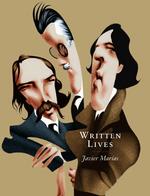
Javier Marias's Written Lives

Written Lives, a collection of essays by the Spanish novelist Javier Marias, may be one of the most unusual and charming books written about writers ever written. Most writers have a healthy interest in the lives and work of others in their trade, believing, to quote from one of Marias's essays, "that in those lives, or in their most secret anecdotes, can be found the key to a writer's work." Often diligent biographers give us access to such details, but with a great deal of dross alongsides, in works often five or six hundred pages long - as Marias notes, we are living in an age of "exhaustive and frequently futile erudition".

In contrast, Marias's attempts to sketch out the shape of the lives of Joyce, Faulkner, Turgenev, Rilke, Nabokov and Kipling, among others, are usually no more than six or seven pages long. His essays are a felicitous mix of precisely weighted observations, whimsical speculation, and telling details or anecdotes. He claims of his selection that "the one thing that leaps out when you read about these authors is that they were all fairly disastrous individuals", although it cannot be denied that, just as a novelist never bothers to write about characters who bore him, so Marias seems to have eliminated from his selection those writers who led quiet, sensible, dull, workaday lives.

Writers emerge here as an eccentric, scatterbrained, and chaotic lot in their personal life, no matter how beautifully alert and composed their work (indeed, perhaps because they gave so much of themselves to their work). Joseph Conrad was so absentminded that "it was not unusual for the book he was reading suddenly to catch fire after prolonged contact with the candle illuminating it". Henry James's speech resembled his written sentences, multi-claused and neverending: "The simplest question addressed to a servant would take a minimum of three minutes to formulate, such was his linguistic punctiliousness and his horror of inexactitude and error". Vernon Lee would come up with "so many arguments in a discussion that she would sometimes contradict herself and it would become hard to follow her". Yukio Mishima was so egotistic that he once made a record "on which he played all forty characters in one of his own plays".

And yet - and yet. Marias says at one point in his chapter on Robert Louis Stevenson, "Nowadays, almost no one takes the trouble to read Stevenson's essays, which are among the liveliest and most perceptive of the past century". If this observation has a faintly unsettling quality, it is because it alerts us to what is missing in Marias's essays, which is some sense not just of a writer's life but also of the particular qualities of his or her work. This lacuna renders some of Marias's essays slightly insubstantial, too much like pleasant trifles. While they are never uninteresting, they serve to remind us that, even at the hands of someone as accomplished as Marias, writers are nothing without their books.

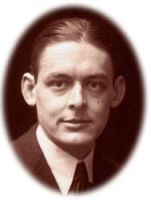
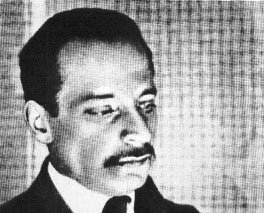
And also perhaps their looks. Tacked onto the back of Written Lives is a long essay, "Perfect Artists", very different in method and manner from the rest of the book. Here Marias delves into his collection of picture postcards of writers, and declares that he is going to look once again at these familiar faces - Dickens, Eliot, James, Baudelaire, Blake - "with pen in hand". Marias's essay on these faces, eyes, poses, gestures, and what they reveal about the personality of the subject - matters that most human beings spend a great deal of time contemplating in their effort to understand each other - contains some of the most delicate and surprising writing one could ever hope to read.

We see Eliot, "a man who had spent decades combing his hair in exactly the same way….He is meticulous, a perfectionist, and he does not find it an effort to remain so immaculate - it is just a question of habit".

Rilke looks absolutely unlike the fragile, questing figure we would imagine from his poems. "His face is frankly dangerous, with those dark circles under deep-set eyes, and the sparse, drooping moustache which gives him a strangely Mongolian appearance….The truth is that he could be a visionary doctor in his laboratory, awaiting the results of some monstrous and forbidden experiment". It is this section of Written Lives that seems likely to become Marias's most enduring contribution to literary biography.

Here are some excerpts from Written Lives: "William Faulkner on Horseback" here, and "Giuseppe Tomasi di Lampedusa in Class". A story by Marias, "Fewer Scruples", can be found here. And here's a recent essay by Marias, "Smoking and Fuming", on Spain's new antismoking law.

Marias's translator for Written Lives is Margaret Jull Costa (who also translated the José Saramago book I wrote about recently). The work done by translators often goes unacknowledged. In truth it is translators, more than any other class of people, who allow cultures to gain access each another and who bring the world to our doorstep. Translators help achieve (to use a phrase by Edmund Wilson which I quote from memory, perhaps not entirely reliably) a "cross-fertilisation of cultures", without which we would be more limited people, confined by linguistic boundaries. In my last post, on the Russian writer Ruben Gallego, I linked to a discussion of the craft of translation by Robert Chandler. Here are two more very good essays on translation: "Novels Found in Translation" by J. Peder Zane and "The Mysteries of Translation" by Wendy Lesser.

Wednesday, March 08, 2006

Ruben Gallego's sub-human world

I've just finished one of the most curious books I've read in a long time: the Russian writer Ruben Gallego's memoir White on Black.

Gallego was born with cerebral palsy - a kind of brain damage that severely affects control of one's motor movements. His grandfather, a high functionary of the Spanish Communist Party, was aghast at his condition and left him to a state orphanage, telling Ruben's mother that her son had died.

Gallego thus grew up in a series of Soviet orphanages thinking that he was an orphan. "At eight," he writes, "I understood one very simple idea: I'm alone and nobody needs me." In the orphanage Gallego and other disabled children like him found themselves inhabiting a realm (as is often the case with cripples and invalids) in which they were only dubiously human - not very far short of freaks. Sometimes teachers from a training institute would come to visit them as part of their exercises, and the boy Ruben would note their "bugged-out eyes and poorly concealed disgust".

Circumstances at the children's home were desperately straitened - in an early chapter Gallego movingly describes having to crawl to the toilet at night because the attendants wouldn't hear his cries. Gallego often uses the present tense for greater immediacy. Here (in Marian Schwartz's fluent translation) he describes a surprise encounter with another human being:

They've moved me to another children's home. I'm crawling down the hallway and an attendant is walking towards me. It's dark in the hall, and she doesn't notice me right away. When she gets very close, she suddenly shrieks and jumps back. Then she comes closer and bends down to get a better look at me. I have swarthy skin, and my head is shaved. At first glance, in the dim light of the hallway, all you can see are my eyes, my big eyes, hanging in the air fifteen centimeters off the floor.
[…]
She walks away. She comes back a couple of minutes later and puts a piece of bread and lard on the floor in front of me. This is the first lard I've ever seen in my life, which is why I eat the lard first and then the bread. Suddenly I feel all warm and cozy, and I drift off to sleep.
There is a phantasmagorical quality about this passage that is reminiscent of Kafka, especially the scene in his famous story "The Metamorphosis" in which the protagonist Gregor Samsa, who has suddenly and unaccountably turned into a large insect and is locked up inside his room by his family, is brought food by his sister not on a plate, but - as if in accordance with his changed status, the fact that he is no longer recognizably human - "all spread out on an old newspaper".

But we also see in this passage how Gallego, from constant exposure to people's reactions to his physical appearance, has developed a capacity for visualising, as if from outside, what he himself looks like, for giving an account of his own strangeness: "At first glance, in the dim light of the hallway, all you can see are my eyes, my big eyes, hanging in the air fifteen centimeters off the floor." It is as if the boy has learnt to see himself just as society sees him. And that detail about finding on the floor in front of him "the first lard I've ever seen in my life, which is why I eat the lard first and then the bread" - it breaks one's heart to hear such things. In fact one might say that Gallego has presented here an ironic parody of a traditional human encounter with a dog, in which one is charmed by the melting brown eyes of the animal and puts a biscuit on the floor for it to eat.

But Gallego's memoir never lapes into self-pity - although he tells us often that he cried at this or that point in his life, in the narration itself he is never crying. In fact, his prose is often beautifully poised at a location that combines bloody-mindedness, bitter irony, lyricism, and quiet pathos. After he passed out from school he became ineligible to stay on in the children's home, and was sent instead, perplexingly, to an old people's home, where death was almost a daily affair. In another unusual and moving passage, he writes about seasonal and gendered patterns of mortality at the home:

The old women liked to die in spring. People died in all seasons, in a steady trickle, but most of all they died in the spring. In the spring it got warmer in the wards, in the spring they opened the doors and windows, letting fresh air into the stuffy world of the old folks' home. Life got better in the spring. All winter the old women clung stubbornly to life, waiting for spring so they could let go and surrender to the will of nature and die in peace. There were far fewer old men in the home. The old men died without regard for seasonal changes. If life refused to tempt them with a bottle of vodka or a tasty snack, they went to the next world without a fight.
Like Primo Levi's accounts of his years in a Nazi concentration camp, or the Turkish poet Nazim Hikmet's poems about life in prison, Gallego's account of life in a stripped-down, attenuated universe forces us to inspect our own lives, our very human-ness, and all those other things which we take for granted.

But to end on a lighter note (and also to take advantage of a lovely bit of serendipity), let me quote to you a joke from Robert Chandler's introduction to his translation of the Uzbek writer Hamid Ismailov's novel The Railway, which I just received two days ago. In it Chandler speaks of all the children in twentieth-century USSR whose parents were killed in Stalin's bloodthirsty purges and who were brought up in children's homes. He writes of how in these homes there was a sense "encouraged by Soviet children's literature, that orphanhood was the ideal state; an orphan's father was Stalin, his or her grandfather was Lenin, and there was no rival father whose influence might corrupt". But some children didn't quite take to this parenthood by the nation. The joke goes:


A teacher asks children in his class what they want to be when they grow up. First child: "Russia is my mother, Lenin is my father; I want to be an engineer." Second child: "Russia is my mother, Lenin is my father; I want to be a nurse." Third child: "Russia is my mother, Lenin is my father; I want to be an army officer." Fourth child: "Russia is my mother, Lenin is my father; I want to be an orphan."
Chandler discusses some of the pleasures and problems of translation in a very good interview here on the excellent literary blog ReadySteadyBook. And you might also want to read this essay by John Banville, last year's Booker Prize winner, on Kafka, which begins with the arresting line: "The question has been asked: was Kafka human?"

Thursday, March 02, 2006

The film writing of Saadat Hasan Manto

Just recently I've been reading some of the film writing of the Saadat Hasan Manto, portraits of the great players and characters of the Hindi film world in the 1930s and 40s put together in a book called Stars From Another Sky, in an English translation by Khalid Hasan. Manto is by consensus the greatest Urdu writer of the twentieth century, so there is no real need to make a case for how good his work is - that is already known. But sometimes, when his name crops up in discussions with friends, or on the rare occasions when it appears in some context in the memory-less Indian press, I get the sense that the side of Manto that is generally remembered today is the Manto of the post-Partition years.

This is the angry, bitter, traumatised Manto who, having left Bombay for Pakistan early in 1948, wrote from Lahore arresting fables of the ravages and ruptures of Partition such as "Toba Tek Singh", the Manto who was capable of compressing the horror and the inhumanity of what he saw into stories sometimes no more than two lines long. (Here is one called "Resting Time": "He is not dead, there is still some life in him." "I can't. I am really exhausted.")

But there is another Manto, the Manto who came to the city of Bombay from his native Amritsar in 1936 at the age of 24, and who over the next twelve years, working as a scriptwriter in the Hindi film industry, became the poet of the charms of chawl life, of joblessness, gossip and drink, of rags-to-riches stories, of sudden affections and bitter partings, of vagabonds and prostitutes, of the sights and sounds of the big city, all of which he recorded with great affection and sly humour. This is the Manto I like best, and this side of him is often seen in its most vivid form not in his stories but in his non-fiction pieces about the film stars, directors, lyricists, and playback singers of his times, most of whom he knew very well through his work.

Here are Manto's pitch-perfect first three paragraphs from his essay on Ashok Kumar, which pitchfork us all at once into a world of frenzied passions and hectic disorder:

When Najmul Hasan ran off with Devika Rani, the entire Bombay Talkies was in turmoil. The film they were making had gone on the floor and some scenes had already been shot. However, Najmul Hasan had decided to pull way the leading lady from the celluloid world to the real one. The worst affected and the most worried man at Bombay Talkies was Himanshu Rai, Devika Rani's husband and the heart and soul of the company.

S.Mukerjee, Ashok Kumar's brother-in-law, who was to make several hit movies in the years to come, was at the time sound engineer Savak Vacha's assistant. Being a fellow Bengali, he felt sorry for Himanshu Rai and wanted to do something to make Devika Rani return. Without saying anything to Rai, he somehow managed to persuade her to come back, which meant that he talked her into abandoning the warm bed of her lover Najmul Hasan in Calcutta and return to Bombay Talkies where her talents had a greater chance of flourishing.

After Devika Rani came back, Mukerjee convinced the still shaken Himanshu Rai to accept his runaway wife. As for Najmul Hasan, he was left to join the ranks of those who are fated to be deserted by their beloveds for less emotional, but weightier political, religious or simply material considerations. As for the scenes he had already done, they were trashed. The question now was: who was going to be his replacement?
It is opening worthy of a great story or novel: so many things rush by so quickly, but by the end of it all we not only feel like we have a grip on all the action, but also on the natures of the three people implicated in it. Notice how sly Manto's comedy is. Logically the first sentence should have been, "When Najmul Hasan ran off with Devika Rani, her husband Himanshu Rai was in turmoil," and only later should Manto have spoken of how a film that was already on the floor was now ruined. But instead he makes us believe for a moment that the loss to Bombay Talkies is the most important consequence of Devika Rani's flight, and only tells us about her hapless husband in the last paragraph. And lest we think that he is being unnecessarily cruel towards Rai, Manto balances things out in the next two paragraphs. One pokes fun at Devika Rani in the juxtaposition of boudoir and film set (the latter being the place "…where her talents had greater chance of flourishing"), while the next pours cold water over poor Najmul Hasan, who had appeared in paragraph one a dashing hero.

And yet there is also something poignant about these paragraphs. That something is not to be found in the writing itself, which is too assured to reveal it, but we feel it when we find out that Manto wrote this piece and the pieces alongside it for a Pakistani film magazine in Lahore in 1950. He was out of work in the new world to which he had migrated, and pining for the Bombay that had supported not just his material life but also nourished his imagination and his powers of moral discernment for the best part of his adult life. Manto was never to return. His condition grew steadily worse in Pakistan, he was almost always out of work and had a family of four to support, he was prosecuted by the state on charges of obscenity for his story "Thanda Gosht", he took to drink, and finally died tragically early in 1955. These long journalistic pieces - about Ashok Kumar, Nargis, Rafiq Ghaznavi, Nur Jehan, Paro Devi - are not pieces concurrent with the events which they describe, but rather attempts to fix in memory a world which had been left behind forever.

Manto's portraits often bubble with a writer's insight into and sympathy for character, a feel for the shape of individual human nature in all its aspects. Here is a bit from his essay on Nargis, who became a star very young:

She was simple and playful like a child and was always blowing her nose as if she had a perennial cold - this was used in the movie Barsaat as an endearing habit. Her wan face indicated that she had acting talent. She was in the habit of talking with her lips slightly joined. Her smile was self-conscious and carefully cultivated. One could see that she would use these mannerisms as raw material to forge her acting style. Acting, come to think of it, is made of just such things.

Another thing I noticed about her was her conviction that one day she would become a star, though she appeared to be in no hurry to bring that day closer. She did not want to say farewell quite yet to the small joys of girlhood and move into the larger, chaotic world of adults with its working life.
"Acting, come to think of it, is made of just such things." With this one sentence, presented as a tentative thought, Manto establishes the relation between what might be said to be a person's real self and the acted self that they project for the camera, showing how they overlap and are nourished by each other. Stars From Another Sky may be not just the most dazzling but also the truest book ever written about Bollywood.

Several stories by Manto have been made into films: Mrinal Sen's Antareen (1994), Fareeda's Kali Shalwar (2001), and Toba Tek Singh by the Pakistani director Afia Nathaniel in 2005, but I have not had the fortune of seeing any of these. Kishwar Ahluwalia's translation of Manto's story "The Hundred Watt Bulb" can be found here, and Mushirul Hasan's translations of the Manto's Partition stories can be found here. Here are two good accounts of Manto's life and work by Khalid Hasan and Khurram Ali Shafique.

Sunday, February 26, 2006

Dhoni


My essay on the Indian wicketkeeper-batsman Mahendra Singh Dhoni appears today in the Sunday Telegraph. I've reproduced the original unedited piece here.

Mahendra Singh Dhoni is 24, hails from a part of India that has produced only a handful of Test cricketers, has a face a sculptor might have fashioned, wears his hair shoulder-length and with golden tints, drinks a litre of milk a day, loves fast bikes, keeps wickets as handily as any gloveman in the country, and smites the cricket ball as thrillingly as any batsman in the world. His three centuries at international level thus far have each touched a level of incandescence that batsmen sometimes achieve only once in a lifetime. These days his arrival at the crease is accompanied by a palpable rise in the temperature.

In twelve months Dhoni has moved from a virtual nonentity to one of the country's most feted cricketers - not easy in the country of Tendulkar, Sehwag, Dravid, Ganguly, and Pathan. Last month Kapil Dev, perhaps seeing in Dhoni some traces of his own limber, lashing batting style, went as far as to call him his "hero". Two weeks ago Pakistan's president Pervez Musharraf, whose usual sphere is the work of statesmen, nations, and other such serious things, was drawn into words of praise for Dhoni's hair. The man clearly has a strange and unpredictable effect on people. Among all India's Test wicketkeepers, only Farokh Engineer can have matched him for dash and brio.

Dhoni hails from Ranchi in Bihar, in the east of India, but he now plays Ranji Trophy cricket for Jharkhand, India's newest state - it was carved out of Bihar in November 2000, eleven months after Dhoni made his first-class debut. His story is in fact representative - while in the past a large percentage of Indian players were schooled in cities with flourishing cricket cultures like Bombay, Delhi, Madras, and Bangalore, increasingly they come from small towns and exhibit a healthy skepticism towards traditional orthodoxies. In his early years in domestic cricket Dhoni’s batting style was a little windy, hit-and-miss. But by 2004 he had learned to temper his game. Once he had displaced Dinesh Kaarthick in India's one-day line-up, he did not need much time to rest his case.

Sent up the order for the first time in a one-day game at Visakhapatnam last April against Pakistan, Dhoni made a stirring 148, driving and cutting ferociously on the up and haring down the pitch to hit the spinners over their heads. In the sapping heat no detail was revelatory of his desire to make his presence felt so much as his frenetic running between the wickets. Nor was he found wanting in invention. The Pakistani medium-pacer Abdul Razzaq was left shaking his head in disbelief after Dhoni suddenly went down on one knee and lap-swept him for four.

An even more remarkable performance was to follow five months later in a game against Sri Lanka. India were set a target of 299, and Dhoni came in at the fall of an early wicket. He began scrappily, but every so often a hit would fly clean out of the field, and he quickly reached fifty. He settled down when the field was set back, and kept motoring on. Again, hunting slow bowling down to the pitch of the ball – like Virender Sehwag, Dhoni believes that spin bowlers are to be dismissed from sight - he tore the Sri Lankan bowling to pieces. By the time he finished off the game with his tenth six he had amassed 183, the highest ever score by a batsman in a run-chase.

It is sometimes possible to locate the exact moment when a batsman provides convincing proof of his mettle. Last month Dhoni earned his spurs in Test cricket with a spectacular maiden Test hundred to help save the Faisalabad Test against Pakistan. Coming in to bat with India still over three hundred runs in arrears in the first innings, Dhoni found himself assailed by Shoaib Akhtar in the middle of a furious burst. The seventh ball he faced was a screaming bumper. For a split second it looked as if it had him pinned, then Dhoni's bat appeared as if from round a corner and hooked it off his eyebrows for six. And then he was off, careering to fifty from only 34 balls and his century from 93.

Dhoni's runs in Test cricket this season, coupled with Irfan Pathan's improving prowess with the bat, have massively boosted India's already formidable batting. And in one-day cricket he has been India’s most influential batsman in the last year. He now averages nearly 54 from 35 games at a strike-rate of better than a run a ball, and the most recent ICC one-day rankings for batsmen placed him at No.3 in the world.

There is something pugilistic about Dhoni's air at the crease, about the way he skips up and down between balls and sometimes cuffs his gloves together before taking guard. The extravagant theatricality of his strokemaking extends all the way to his follow-through, in the way he almost sweeps himself off his feet when driving off the back foot or pulling and hooking. Like Adam Gilchrist, to whom he has been instantly compared, Dhoni exudes an intense restlessness with the bat in hand. Both are instinctive shotmakers willing to take chances in order to score quickly and prevent the opposition from closing in around them. Both can turn a game around in half an hour.

There are still some rough edges to Dhoni's cricket. Because he sights the ball so early and goes so hard at it, he is vulnerable to the good-length delivery leaving him off the pitch. And while his keeping has shown steady improvement - he was one of the first in the Indian team to wholeheartedly embrace Greg Chappell's new ideas and work ethic - he still has some way to go before his work to slow bowling reaches the level of the last Indian wicketkeeper to keep outstandingly to spinners, Nayan Mongia. Surprisingly, in a land of chirpy wicketkeepers, he is fairly quiet behind the stumps. In front of them his booming bat does all the talking he needs to.


I also had the good fortune of watching live Dhoni's maiden international hundred against Pakistan at Visakhapatnam last year. Here is my piece from last April about that innings, "A Man Possessed".

Thursday, February 23, 2006

Mumbai's Roads, Always Under Repair

Mumbai's roads are always under repair,
These roads always on the sickbed lie,
Mumbai's citizens are always in de'pair,
Wondering they live in this city why.

Tar, cement, pitch and sand,
Strew the roads and clog them good,
Bricks pass slowly from hand to hand,
Everything takes twice the time it should.

On foul vapours does the citizen choke,
His face is always streaked with grime,
The dust enters and cakes his throat,
He's stuck in traffic all the time.

And up above the open sky,
Empty but for a lonely kite,
Are there no roads in that universe high?
Nothing in the spaces of the starry night?

Sunday, February 19, 2006

Samrat Upadhyay's Royal Ghosts

My essay on the Nepali writer Samrat Upadhyay appears in the Los Angeles Times today. It is reproduced here in a slightly modified form.

The Royal Ghosts
Samrat Upadhyay
Mariner, 2006
$12

Most writers, even if they are not especially showy, intend us at least to linger upon a metaphor or a sentence, to notice the brightness of a phrase. But Samrat Upadhyay is among the smoothest and most noiseless of contemporary writers. His is an abstemious art: he sees that his characters, mostly members of the middle and lower classes — businessmen, middle-rung workers, housewives, servants — do not think in any obviously literary manner, and he strives to keep his work in the same key as their lives. He resolutely eschews metaphors, makes sparing use of colons and semicolons, and almost never resorts to that word so favored by short-story writers: "suddenly." His work is so subtle that it does not even seem especially subtle.

Although he has resided in America for nearly two decades, Upadhyay has never lost touch with his native Nepal, a country that has produced very little English-language fiction. Indeed, the capital, Katmandu, is the locale for all of his work. His debut collection of stories, Arresting God in Kathmandu, showed people negotiating a thicket of choices in a close-knit, tradition-bound society in which the needs and preferences of families are as important as those of individuals and various codes of caste and class restrict the free intermixing of people. (For example, even adults cannot marry without parental approval and, in fact, often have their life partners chosen for them by their parents.)

In a magazine interview, Upadhyay has described life as "a constant negotiation between limits and freedom from those limits, regardless of culture." The country of his birth has given him an especially rich mine of material in which the tension between individual freedom and societal constraints is evenly weighted and therefore narratively compelling. It is to his credit that in his 2001 stories and the 2003 novel The Guru of Love, he writes about Nepali society in English, for a primarily Western readership, without ever letting the whiff of exoticism invade his work.

Upadhyay returns in his new collection of stories, The Royal Ghosts, to themes familiar from Arresting God, the most pervasive of which is the struggle of men and women to understand each other, to work their way across the hollows and uncertainties that lie between them and find a way of living together. He often writes from the point of view of an interested third party, not just one or the other protagonist. (As if to dramatize how intricately people's lives are linked with others, his stories always attend closely to the lives of at least four or five characters and how they feel about one another. This gives his stories a kind of novelistic roominess.)

In "Father, Daughter," Shivaram is alarmed by the behavior of his daughter. She has left her husband — a match Shivaram arranged — for no other reason than that she cannot love him and has resumed an earlier liaison with the son of a low-caste cobbler. Conscious of the disapproving murmurs all around him, Shivaram declines to participate in her second marriage, so that "people would say less, say that he'd at least attempted to protect his dignity." His speculative knowledge of his daughter's motives and feelings, and his mixture of perplexity, outrage, tenderness and frailty, gives the story an unusual charge.

In "A Servant in the City," a teenage village boy, Jeevan, is a servant to a single woman and witnesses her affair with her former employer, which has made her a pariah. Gradually she confides in Jeevan, who supports her through her low spells. Over time, Jeevan finds that he has become "strangely possessive of her, as if he were the only one who truly knew her." He suspects that her lover will never keep his promise to leave his wife and marry her, and one day Jeevan blurts out these thoughts, turning from a spectator into an agent. Reprimanded by his mistress for his insolence, he thinks about returning to the village, "to remind himself where he came from."

A new pressure is also at work on Upadhyay's characters: politics and recent events in Nepal. The young democracy overseen by a monarchy has endured a turbulent five years. In 2001, the crown prince fatally shot several members of the royal family, including his father, King Birendra, in a drunken fit before turning his gun upon himself. Since then the country has been riven by a bloody Maoist uprising that has taken thousands of lives. The Royal Ghosts shows how the tension among the monarchy, democrats and communists has eroded the country's social fabric, demolishing the old stability against which the characters of Arresting God in Kathmandu played out their lives. This darkness and violence lie at the edges of several stories in the new collection and are addressed explicitly in a few of them.

In "The Weight of a Gun," the elderly Janaki finds a gun hidden under the mattress of her schizophrenic son, Bhola, who has often boasted that he is a Maoist. She lifts it gingerly, her head buzzing with questions. "Holding it carefully, she peeked out of the window. People were going about their business." Everything is as normal, but this one gesture of Janaki's is revelatory; she has stepped over the threshold and has been sucked into the morass.

Even when he engages most closely with politics, Upadhyay always illuminates the private realm, as in the book's splendid title story. On the morning that word of the killings in the royal family sends shockwaves across Nepal, Ganga, a taxi driver mistrustful of the monarchy and generally of all those in power, drives around Katmandu, observing various scenes. He pays a visit to his younger brother Dharma, who works in a photocopy shop.When Ganga enters the shop, it is dark. He sees his brother sprawled naked on a bed with another man. Learning that Dharma is homosexual hits Ganga much harder than the death of the monarch.

Distraught, he beats up his brother, then wanders from place to place. (Upadhyay's characters are great wanderers — when they feel tense about something, they go for a walk.) Late that night, a very drunk Ganga seeks out an acquaintance, who wonders if there was some conspiracy behind the killings. Ganga's response meshes the day's two big events. "Maybe, maybe," he slurs, interpreting history through family. "How can we know what goes on behind closed doors? We cannot even know with our own relatives."

Monday, February 13, 2006

Jeet Thayil's reading

The poet Jeet Thayil has some worthy observations about literature and some good picks in recent books by new Indian writers on the books page of the Times of India yesterday. I concur with Thayil's view that a lot of new Indian writers are "producing unexpected work in terms of genre and language" - I've read three very good first novels by Indian writers in the last two months alone (I've written about two here and here, and the third is my friend Sonia Faleiro's The Girl). And Thayil has some very good things to say too about Henry James and Naipaul. I quote the whole piece here:
I liked Rupa Bajwa's The Sari Shop, Samit Basu's The Manticore's Secret, Pankaj Mishra's An End to Suffering: The Buddha In The World, Sarnath Banerjee's Corridor, Rana Dasgupta's Tokyo Cancelled, Siddhartha Deb's Surface.

It's good to know there are young Indians producing unexpected work in terms of genre and language. And it's good to know Indian publishers are finally willing to take a risk and take on fresh material. India has more young people than ever before and they deserve a new kind of writing.

I think he's the master of the semi colon and the em dash. Look at the first paragraph of A Way In The World for an example of authoritative punctuation. I go to Dante for the difficulty, to remind myself that there's no need, ever, to explain.

For pleasure, I read cookbooks and Salim Ali's The Book Of Indian Birds, which has some delightful passages.

For instance this description of the Malabar Whistling Thrush: "In breeding season, male has a rich and remarkably human whistling song, rambling aimlessly up and down the scale, whence the bird gets its popular name of 'Idle Schoolboy'."

My favourite characters from literature are Moby Dick, Babar, Aeon Flux, Billy the Kid, Agastya Sen, Job, Nancy Drew, Nick Charles, Saleem Sinai, the cities of Bombay and New York.

As for a favourite line, at the moment probably this line from an Edward Thomas poem: 'Blessed are the dead that the rain rains upon.'

Here are some poems by Thayil - they're not entirely to my taste, but you can make up your own mind about them. He can also be found in conversation with the writer Eunice D'Souza here. And here's another piece by him on a subject on which any alert Indian moviegoer could come up with his or her own essay: "Borrowed by Bollywood". I don't possess a copy of A Way In The World, but if some reader who does could quote the first paragraph in a comment, we could all have a look at that.

And here's another very good piece by another Indian poet, Keki Daruwala: "On Writing in English: an Indian poet’s perspective". Daruwala says very perceptively, about the endeavour to find a poetic language apposite to his circumstances: "In university one had been brought up on a diet of Shelley and Keats. When you left the campus you faced harsh reality around you -- drought, poverty and communal riots. One needed a harsh language, words with a saw-edge, words which rasped and got into you like the shards of a broken bottle. Slowly, almost unconsciously the poems developed a vocabulary and a soundscape of their own." A good interview with Daruwala in the Hindu can be found here.

Sunday, February 05, 2006

Comments enabled

Ok, in response to a growing chorus of voices (and also a lot of mail on my previous post on Rang De Basanti), I'm enabling moderated comments on the Middle Stage.

I'm not online for very long everyday, so my replies will sometimes be less regular than normal - and nonexistent when I'm travelling - but I'm looking forward to some dialogue.

Tuesday, January 31, 2006

Against Rang De Basanti


On Saturday I went to watch Rang De Basanti with some friends at Paras Cinema in Nehru Place. Aamir Khan's latest foray into Indian history is without question a cinematic venture of remarkable daring - it left me completely stunned. In almost two decades of watching Bollywood productions I have never come across such preposterous drivel as that served up in the second half of this film (one reason for this, of course, is that Rang De Basanti takes itself so seriously).

Rang De Basanti is about a group of youths, pleasure-loving, individualistic, largely ignorant of their country's history and cynical about its future (this much of the film is by and large well done; the characters are true to life and the dialogue is witty). Under the direction of a young British filmmaker keen to recreate some of the episodes of the Indian independence movement, particularly from the lives of Bhagat Singh and Chandrashekhar Azad, they begin to gain a sense of a past that is now remote to many young Indians, and are forced to rethink many of the beliefs and attitudes towards life that they previously took as given. Although the sudden metamorphosis into sepia-tinted drama, in which the characters play out episodes from the lives of Indian revolutionaries, is clumsy, one accepts it because Hindi cinema is rarely perfect - at least it is an attempt to do something inventive.

But what follows not only stretches the boundaries of logic, it also sends out a dangerous and incendiary message that, if anything, works against what the film seems to be trying to convey to us: that we should stand up to be counted, attempt to honestly do what we can to improve our situation.

Halfway through the film there appears a young army pilot Ajay Rathore (played by the actor Madhavan) who baits the other youths about their cynical attitude towards their country - he voices, as it were, the message of the film. Later, Rathore is killed when his plane, one of the MIG-21s which have earned such notoriety in our country, suddenly crashes. At first his friends are only griefstruck, but later they become outraged when it appears that official negligence, especially corruption at the highest levels of government, has been to a great extent responsible for the tragic loss not only of Ajay's life but those of other young pilots. They take out a demonstration against the Defence Minister (Mohan Agashe), who organises a police lathi charge to deal with them, in which Ajay's mother is seriously injured.

At this point our heroes suddenly begin to hear the whispers of history in their brains. What did Bhagat Singh and Azad do in a similar situation (the lathi charge is likened to the Jallianwala Bagh massacre)? They took matters into their own hands. Thus, inspired by their newfound idols, they decide arbitrarily that no other recourse exists than to assassinate the Defence Minister. They carry out the assassination in a cold-blooded manner - and this is where the film is most dishonest, showing us a reconstruction of the revolutionaries lying in wait for Dyer, and then cutting to the youths waiting outside the minister's house in the same pose.

Also, the father of one of the youths is a henchman of the minister's, and also has blood on his hands in the matter of the defective MIG planes. The solution here again is to kill him in cold blood - his son does this himself. Clearly, when it comes to sounding the drum rolls of justice, family ties are of no importance. Indeed, there is something chilling and repulsive about a young man so willing to play judge, jury and executioner to his own father for the crime of corruption. Rakeysh Mehra may believe there is something tragic-romantic about the character's behaviour, but in truth it is nothing other than barbaric.

Even worse things are to come. The country is shocked by the minister's assassination, and with a bit of help from his party's propaganda machinery (the bright saffron worn by the functionaries leave no doubt as to which party is intended) he becomes a martyr. Our heroes are once again in the throes of despair. What is to be done now?

Another bright idea: the revolutionaries of old actually furthered the cause, the spread of the truth, by giving themselves up to the police, thereby enlisting the country's sympathies. So our young men make haste for the All-India Radio office, take it hostage (again they feel no qualms about drawing guns), and broadcast the truth about the minister's evil deeds over national radio. Hundreds of people around the country are shown listening to the broadcasts, and being persuaded by their message that the steps they took were the only ones they could have possibly taken. They phone in by the dozens to express their support. The building in which our bright young revolutionaries are holed up is surrounded by the police. In another of the film's many excruciatingly painful scenes, we see the young men celebrating the success of their mission, and embracing each other warmly in at least a dozen successive shots as victory music plays on the soundtrack. Never do they appear so self-involved, deluded, and plain daft as at the point when they have apparently made their greatest sacrifice. Right after that they are gunned down by the police, and become martyrs themselves.

Unholster your pistols then, O youth of India, and if you've been wronged in any way, think of who it is you want to eliminate. The worst thing about Rang De Basanti is that not only does it sloppily promote the idea that violence is fine as long as you are persuaded that the cause is right, it uses an absurd parallel from history to legitimise it, and at every stage superimposes the frame of history upon the action. Even as it seems to argue that the youth of the country should take responsibility for our shared predicament, it finds a convenient scapegoat for our problems in the figure of a politician, and makes the elimination of one or two people the object of the action. Attempting to stimulate us to greater awareness and maturity, it instead promotes an adolescent view of political action. It wildly mixes all kinds of things from all kinds of places, and rolls them up into one gigantic farrago of nonsense which it attempts to rush past the viewer and stun him or her into agreement.

It seems to me that it is high time that Aamir Khan got off his nationalism-patriotism-'wake-up, you-people' hobbyhorse. His last two attempts in the genre have produced two turkeys, and he appears to have forgotten that he after all an actor, someone who gets into the skin of different kinds of people with varying motives and preoccupations, not just someone who embodies the voice of the resistance in different accents and from different points in history.

We are often told that we should attend to the lessons of history, but if there was ever an argument against it, then that is Rang De Basanti.

Here are some older posts about other Hindi films: Nagesh Kukunoor's Iqbal, and Anurag Kashyap's Black Friday.

Wednesday, January 25, 2006

José Saramago's Unknown Island

Anyone who has opened a book by the Portuguese novelist José Saramago will have realised that he is not a writer who makes any concessions to the reader: he demands all that we have to give. For one, Saramago writes great chunks of prose that sometimes go on for pages without offering the reader the hospitality of a paragraph break. When he uses direct speech he does so without quotation marks or indentations. Thus when reading him we often find, to quote a phrase from an essay by Milan Kundera on Kafka, that "the eye finds no place to stop or rest".

Additionally, Saramago’s themes are often difficult, and his work is by turns fantastical, allegorical and even heretical. Blindness imagines a whole society afflicted by a loss of sight and the chaos that this brings in its wake. The Gospel according to Jesus Christ earned him the condemnation of the Catholic Church for its portrayal of Jesus not as the Son of God but of Joseph, and of God himself as a kind of power-hungry dictator. Something of this contrarian spirit, this determination to invert accepted ways of seeing things and indeed to be always at odds with power, can also be seen in the speeches and comments made by Saramago, an unreconstructed communist. In 2002 he courted controversy by likening the Israeli occupation of the West Bank to the Holocaust, and George Bush's re-election in 2004 prompted him to make several acidic observations on America's role in world politics.

Nevertheless, Saramago is too good a writer to ignore, for he is that rarest of rare things, a genuine stylist whose distinctive voice and way of looking at the world is stamped on every sentence he writes. It seems to me that if you were looking to approach Saramago for the first time, you should read his beguiling little fable The Tale of the Unknown Island. It is such a slim volume (one could have easily fit it into the recent Pocket Penguin series) that one might with justification call it a short story, except that it manages even at this length to convey a sense of amplitude – of a beginning, a middle, an end, and even the sense of a future – that is novelistic.

Saramago’s tale begins like a story from The Arabian Nights. We hear the voice of someone telling us the story more distinctly than we hear the characters themselves, and the narrative of a man approaching a king with a request is a convention perhaps as old as storytelling itself:
A man went to knock at the king’s door and said, Give me a boat. The king’s house had many other doors, but this was the door for petitions. Since the king spent all his time sitting at the door for favours (favours being offered to the king, you understand), whenever he heard someone knocking at the door for petitions, he would pretend not to hear, and only when the continuous pounding of the bronze doorknocker became not just deafening, but positively scandalous, disturbing the peace of the neighbourhood (people would start muttering, What kind of king is he if he won’t even answer the door), only then would he order the first secretary to go and find out what the supplicant wanted…. Then, the first secretary would call the second secretary, who would call the third secretary…
Many readers will no doubt find in this paragraph an accurate picture of the Indian bureaucracy, and if you substitute democratic politics for the rule of kings, it is possible to see also in this paragraph, especially in the wake of the recent cash-for-questions scandal, a picture of of Members of Parliament who spend their time sitting not at the door of petitions from those who have elected them but "at the door for favours".

Finally the king does appear, and is told by the man that he wants a boat to go "in search of the unknown island". The king is skeptical: no more unknown islands exist. The man is equally sure that he can discover one, and finally he is granted his boat. And as the man takes his leave to set off on his journey it turns out that the story has a hero and a heroine: the cleaning woman of the palace who, impressed by the man’s calm resolve, now decides that:
she had had enough of a life spent cleaning and scrubbing palaces, that it was time to change jobs, that cleaning and scrubbing boats was her true vocation, at least she would never lack for water at sea. The man has no idea that, even though he has not yet started recruiting crew members, he is already being followed by the person who will be in charge of swabbing down the decks and of other such cleaning tasks, indeed, this is the way fate usually treats us, it’s there right behind us, it has already reached out a hand to touch us on the shoulder while we’re still muttering to ourselves, It’s all over, that’s it, who cares anyhow.
The man gets his boat, and the cleaning woman becomes the first member of the crew, but they have no luck in recruiting other sailors for his voyage, for they all insist that there are no more unknown islands.

Even at its simplest, Saramago's writing tilts at deeper meanings. The voyage in pursuit of unknown islands serves in his book as a metaphor for self-discovery. He plays on the well-known saying that no man (or every man, depending on whether the speaker wants to insist that man is inextricably connected to society, or there is always a core to him that is inaccessible to others) is an island when he has his protagonist insist that "you have to leave the island in order to see the island, that we can’t see ourselves unless we become free of ourselves." We might say that this is one of the things great narrative art does: to allow us, through an extended empathetic engagement in the lives of others, to become free of ourselves, to leave our own islands (as I suggest in this post and this one).

A great deal more happens that night: the man realises he is falling in love with the cleaning-woman, and later he sees a dream in which a lot of fantastical things happen. Saramago's finish is wholly in keeping with the playful, whimsical spirit of his story. The next morning…

…as soon as the sun had risen, the man and the woman went to paint in white letters on both sides of the prow the name that the caravel still lacked. Around midday, with the tide, The Unknown Island finally set out to sea, in search of itself.
Saramago was awarded the Nobel Prize in 1998. His wonderful Nobel lecture, "How Characters Became the Masters and the Author Their Apprentice", can be found here, and an autobiographical essay here. Since Saramago takes his politics so seriously, here is an extract from a speech made by him in 2002, "For Whom The Bell Tolls", and here is an essay called "Reinventing Democracy" written in 2004. Julian Evans provides an excellent survey of Saramago's life and work here, and Philip Hensher has a very fine piece on literary endings here.

Tuesday, January 17, 2006

The despair of Attila Jozsef

The Hungarian poet Attila Jozsef (1905-1937) lived a short, sharp, incandescent life, wracked by poverty, loneliness, suffering and uncertainty, which he somehow managed to channel into verse of great beauty and poignancy. Born into a poor family and left in the care of foster-parents for some years before being restored to the care of his mother, who served in different households as a domestic help, Jozsef (like the young Charles Dickens, who when very young did a spell in a boot-blacking factory to bail out his debtstruck family) was forced to work from a very early age. In an autobiographical essay written in 1937, the year in which he took his own life by throwing himself under a freight train, Jozsef recounts all the things that he did to survive from day to day:

War broke out when I was nine and our lot became progressively worse. I did my share of queuing. There were occasions when I joined a queue at the foodstore at nine o'clock in the evening and just when my turn was coming at half past eight the next morning they announced that all the cooking fat had gone. I helped my mother as best I could. I sold fresh water in the Világ Cinema, I stole firewood and coal from the Ferencváros goods station so that we should have something to burn. I made coloured paper windmills and sold them to children who were better off, I carried baskets and parcels in the Market Hall, and so on.
Joszef's experiences prepared the ground for his verse. Few poets have written about poverty - its gnawing uncertainty, lack of hope, pathetic abjectness, raw despair - so powerfully. Here are the first three stanzas of his poem "What Will Become Of Him" in a translation by Zsuzsanna Ozsváth and Frederick Turner:

What Will Become of Him...

What will become of him, whoever
has got no handle to his hoe,
upon whose whiskers crumbs don't quiver,
who dawdles, gloomy, thrawn, and slow;
who would from half a furlong's hoeing
keep one potato out of three,
whose hair falls out in patches, growing
bald unnoticed - who'd care to see?

What will become of him, whoever
has but five acres under crops,
whose draggled hen clucks at the stover,
whose thoughts nest in a mudhole's slops;
when no yoke clinks, no oxen bellow;
when mother serves the family soup
and steam from a liquid weak and yellow
drifts from the bottom of the scoop?

What will become of him, whoever
must live alone and work alone;
whose stew has neither salt nor savour,
the grocer gives no tick nor loan;
who has one broken chair for kindling,
cat sitting on the cracked stove's shelf;
who sets his keychain swinging, jingling,
who stares, stares; lies down by himself?
"Whose stew has neither salt nor savour,/the grocer gives no tick nor loan;" - those lines would make any other poet burn with envy. And even if we do not immediately get the meanings of words like 'thrawn', 'draggled' or 'stover', we are captivated merely by the sound of Jozsef's verbal music. (This alerts us to the truth of a remark made by TS Eliot on the poetry of Dante, often thought to be difficult and abstruse, "It is not necessary to understand the meaning first to enjoy the poetry…our enjoyment of the poetry makes us want to understand the meaning.”)

Jozsef wrote a great deal about a world such as this - hungry people appear often in his poems, including on several occasions the poet himself. Other poems are about his mother, now dead and gone to her grave ("Why did you bend your back over the washing?/That now in a box you should straighten it?"), and about what it means to be a poet, one of which pictures life as a glass of beer ("I quaff great draughts of reality,/neat world with foaming sky on top.") But Jozsef was also capable of writing in other keys. Here is his late poem "Lullaby", with its soft, murmuring sounds and its childlike acts of imagination, in a translation by Vernon Watkins:

Lullaby

The sky is letting its blue eyes close;
The house its many eyes closes, too.
The quilted meadow lies in a doze:
Go to sleep softly, little one, do.

The wasp and beetle are both asleep;
Their heads are down on their feet, and through
Darkness, a drone in the dark they keep:
Go to sleep softly, little one, do.

The tram has fallen asleep as well,
And while its rattling slumbers, too.
It tings in its sleep a little bell:
Go to sleep softly, little one, do.

The coat is sleeping across the chair,
The tear is sleeping where it's worn through;
No more to-day will it stretch the tear:
Go to sleep softly, little one, do.

The ball and whistle are both at rest.
So is the wood where the picnic grew.
Even your sweets by sleep are possessed:
Go to sleep softly, little one, do.

All will be yours in the crystal ball;
You'll be a giant, it will come true;
But just let your little eyelids fall:
Go to sleep softly, little one, do.

A fireman, soldier, herder of sheep,
You'll be all three, and each will be you.
See, your mother is falling asleep:
Go to sleep softly, little one, do.
Some more translations of Jozsef's poems by Ozsváth and Turner, from their collection The Iron-Blue Vault, can be found here. And an archive of 20 translations of Joszef by different hands is here, along with the essay by Jozsef from which I quoted earlier. An excellent essay on Jozsef by the Hungarian émigré writer George Szirtes, winding through his work but also dwelling upon the nature of translation itself, can be found here.

And while we're on Hungarian literature, let me also try to interest you in the work of the novelist Sandor Marai, whose two novels available in English translation, Embers and Casanova in Bolzano, are among the best novels I've ever read. Embers was published in India by Penguin, and is quite easily available. I've written an essay on Marai's work here.