In a week in which Mumbai was badly shaken up by a series of heinous bomb blasts (I got off a train on the Western line just half an hour before the blasts, and thus narrowly avoided being sent up to that special enclosure in hell for the souls of departed literary bloggers, bereft of any books but full of copies of the Times of India and the Hindu), here is a set of not bombs but books that shook the world - works that have served for hundreds of years to open people's minds and fruitfully complicate their worldviews. This month Atlantic Books brings out a series of short "biographies" of some of the most influential books in history, each written by a distinguished writer. The first few volumes include Christopher Hitchens on Thomas Paine's The Rights of Man, Francis Wheen on Marx's Das Kapital, Simon Blackburn on Plato's Republic, and Bruce Lawrence on The Qur'an. A slightly later release is the American satirist P.J. O'Rourke on Adam Smith's The Wealth of Nations.
Already some bits and pieces of work found in these books is available online: Wheen's excellent essay on Das Kapital in the Guardian last weekend argues that we should look at Marx's opus not as a work in the tradition of classical economics but more as a piece of literature, and O'Rourke argues in a recent issue of the Weekly Standard that Smith's The Theory of Moral Sentiments, which almost nobody has ever read, is a vital to an understanding of The Wealth of Nations. People hold very different opinions of who was the greater thinker, Marx or Smith, according to temperament or political persuasion, but a piece in the Economist from 2002 notes that "titles in print about Marx outnumber books about Adam Smith by a factor of between five and ten". And certainly, while our universities and large swathes of India have a great many people who call themselves Marxists, I've never in my life come across a Smithist, which suggests paradoxically that Smith may have been the harder man to emulate. An edited extract from Hitchens's book on Tom Paine appears here.
About the blasts: they were a nasty shock, but not particularly a surprise. We live in what history may later call the age of terrorism, and Mumbai's trains are easy and tempting targets. We need much better security systems for our train coaches (which are really not much more than boxes on wheels), and perhaps a special vigilance force, to man entrances and exits of stations and to travel on trains themselves. Multiple entrances and exits to stations, often created by people breaking down walls and jumping over fences, must be sealed off, and walking on the tracks made a punishable offence. (This would also root out an almost daily tragedy of the city, that of people being run over while crossing the tracks. The yearly toll of this - 3500 by this estimate - far outstrips the toll of Tuesday's dead.) Thus, the one positive of this disaster is that it may enforce a long-needed modernisation of our creaking systems, as also a better enforcement of the rules already in existence but blithely ignored by both the public and the authorities.
Clearly all this will not be cheap, but life should not be so cheap either. I can think of a simple measure to raise the money. Mumbai's citizens would gladly pay a safety surcharge of 50 paise on every local train ticket bought, and perhaps an extra Rs.5-10 on their season tickets. At about 60 lakh passengers a day, that should raise the necessary funds simply enough, and soon enough, for our 2000-odd trains going up and down every day. The world has changed for good, and the enemies of our open society lurk within our ranks - it is possible we pass them every day on the street. It is hard to pull out such threats by the roots. We need to take all the steps needed just to survive in these new uncertain times, before Tuesday's disaster is revisited upon us.
Friday, July 14, 2006


Friday, July 07, 2006
Dnyaneshwar Kulkarni Changes His Name
My story "Dnyaneshwar Kulkarni Changes His Name" appears this month in First Proof 2, Penguin's yearly anthology of new Indian writing. Here is the first paragraph:
Dnyaneshwar Kulkarni had endured a wretched morning. It was the month of October; the sun came out early, hot and fierce, and Dnyaneshwar was rather frail of constitution. Five minutes at the bus stop was enough to make him feel faint. Inside the crowded bus it was, if anything, more uncomfortable. The journey from the suburbs to the city sapped his energies even before his work for the day had properly begun; by the time he got off at Girgaum he felt he was running a temperature. Then, as he was crossing the road, the strap of his sandal abruptly gave way. How strange that, when he had been wearing it for a good eight months without complaint, it should give way on just this day! Dnyaneshwar broiled in the heat for another five minutes while an indolent cobbler ran some stitches through it. Next, as he was taking the railway bridge over Charni Road to get to Marine Drive, who should appear all of a sudden but a ticket checker. Dnyaneshwar protested that he had no intention of taking a train, and that all he wanted to do was to get to the other side, but the TC said he’d heard that story a million times before, and fined him a hundred rupees for travelling without a proper ticket. Furthermore, the TC was one of those people who insists on making out a receipt for every wallet they lighten; not satisfied with plain ‘D. Kulkarni’, he elicited Dnyaneshwar’s full name and wrote it out in bold letters—DNYANESHWAR KULKARNI—as Dnyaneshwar watched horrified, grasping the extent to which unseen malevolent powers surround man on all sides, subtly directing the workings of the visible world towards their own ends. By the time he entered the Directorate of Records, Dnyaneshwar’s head was throbbing like a cement mixer. Who would have thought it would be such an ordeal just to get to his destination?Dnyaneshwar only goes this far here, but he goes much further in the book: into the Directorate of Records, back to the railway station, to a Gomantak restaurant, and finally to watch one of the greatest Hindi films of all time.
Sunday, July 02, 2006
The acid thoughts of Sasthi Brata
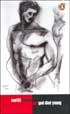 A recurring figure in modern literature is that of the Questioning or Dissatisfied man - distanced, for this or that reason, from the customs and codes of his own society, but also rendered strangely immobile, apathetic, rootless by his rebellion, and almost chronically discontented and splenetic, ill at ease wherever he goes and whatever he does - the figure, in other words, of an alienated human being. But this condition, while never pleasant, is nevertheless a fashionable attitude towards life, which is why it is the task of readers coming across this predicament in literature, whether in autobiography or even fiction (for fiction can be untruthful), to judge whether it is genuine or merely a pose - fruitful dissatisfaction with fossilised ways of life, or merely the caterwauling of a selfish being.
Reading, in fits and bursts over the last month, Sasthi Brata's My God Died Young, a flaming autobiographical work in English first published in 1968, I judge it to be six parts solid, worthy, caustic writing to three parts romantic angst and egotistical flailing (consider the very title of his book) to one part flab. The best parts are very powerful, but that even when Brata is on less solid ground he sometimes searches out his own egotism and immaturity. "I wrote this book to try and understand myself," he says at the beginning (he was not even thirty when he wrote it), and autobiography, he knows, "demands honesty". One feels that the two sides of Brata are somehow intertwined, and that we must learn to take the good with the bad. Nearly four decades after it was first published, there is still something for the contemporary reader in Brata's journey towards self-understanding. If his ideas and language have dated slightly, the kinds of pressures and predicaments he describes have not - he still speaks to our times.
Brata was born in 1939, the youngest child of a prosperous Bengali business family. A late and probably unexpected arrival, he "was not awaited with any sense of excitement" at his birth, and wonders if this has anything to do with his lifelong attitude "of strained resentment with the world". A spoilt child, doted upon by his mother, he received a traditional Brahminical upbringing, strewn with constraints, boundaries and taboos, and an education at a stern Catholic school that imbued in him feelings of guilt at any kind of perceived transgression, such as his awakening sexuality (He rightly remarks of this type of complacent writhing moralizing Christianity, still commonly found in Indian convent schools, "Adolescence is the most impressionable period of life. We were taught values which were obviously perverse at a time when we were defenceless.").
"Thanks to the twin pressures of a Brahmin home and a nonconformist upbringing," Brata notes, "most of the time I move around in the steel braces of subconscious inhibitions." Most Indians will be conversant with this feeling. Indeed, one of the arguments advanced by Brata's book is the extent to which our adult lives are in thrall to conceptions and attitudes formed in childhood. University at Presidency College in Kolkata, and a love of debating, freed him somewhat of these shackles. He studied science, flirted with fashionable Marxist ideas, believed he was a young genius and prophet, fell in love, agonised about religion, and contemplated his place in the world. Later, unhappy in enclosed, stratified India, he moved West, and decided to pursue a path as a writer. Everywhere he found that obstacles to his dreams lay not just in the conventions of society and the shape of his personal destiny - as some people like to believe - but also in something marshy and tortured in his own nature, even more generally human nature.
Brata's confessional language has a powerfully persuasive air. " "I hated my family and since I was a part of them, I hated myself too." "My outward actions were frenzied and daring because the inner man was so tame and ordinary." "Even the most genuine emotion [I felt] was centripetal, tending towards myself in the centre, with the other person as an incidental circumference. I don't believe I had any real feelings. I sometimes wonder if I do now." "I move about in a thick viscous cloud, always looking over my shoulder to see if anyone is watching." "I was the shadow of a shadow. It is always hard to build a life on such foundations."
Many readers will perceive that is not that some of Brata's feelings, particularly about his pervasive egotism, denote an abnormal man, but rather that most people manage to go through life without realising these things. The effect of Brata's work, even its more extreme formulations, is to point us towards greater self-knowledge. As when he observes, thinking about the failure of his relationship with a girl he loved deeply and in particular about his callous and hurtful behaviour towards her:
'Love' is an exposition of personality, essentially against the grain of ordinary experience. To be viable, we have to conceal. Sophistication, manners, tact, in a word all the qualifications of civilized living, insist on our ability to appear different from what we really are. To love someone else, we have to reverse the processes of our conditioning. We have to be naked, giving, non self-possessed. This is hard. There must always be a fight. Few people win. At best it is an uneasy truce, with the ego forever ready to stage an unexpected ambush.
Some of Brata's phrases - fusty Britishisms, and curious analogies to English examples rather than native ones of the kind one can still find in, say, a professor of English in Kolkata - are a mark of his time and place and his education. The old midwife who delivered him "looked as close to the Witches in Macbeth as Shakespeare could have imagined them to be." How could Brata know how Shakespeare had imagined his witches? "A great gulf had come between [my father and me] and not even a risen Lazarus could hope to bring us together again." Lazarus? Even if he did manage to rise, it is hard to imagine him doing so to reunite a Bengali youth and his father.
But a great many of these pages bear the strong stamp of Brata's personality and experience - it is not just his thoughts that are of interest, but also the power of his language (this at a time when, I think, there was no great respect anywhere for Indian writing in English). "The years of childhood are slow and timid; the transition to youth comes in a sudden rush." On Kolkata's College Street: "Bookshops cling like running sores all along its sides; bazaar notes, made-easies, a-pass-in-half-an-hour, sure-predictions, stare at the passer-by from the shelves." The only poor word in that exciting sentence is "stare".
Brata's restlessness and dissatisfaction are infectious. "I believe there is a basic contradiction," he writes of his unwillingness to live in India, "between the premises of Indian society and the kind in which I wish to live." That is a contradiction which - in an age of matter-of-fact corruption and easy bad faith, intellectual sterility, and petty moral censoriousness to go with our traditional smugness and hypocrisy, our willingness to abide in self-made prisons - a great many Indians are feeling as, in our opening-out world, we all become more and more different from each other. Brata is unembarrassed about writing a sentence like, "How [does] Man achieve dignity other than by asserting the freedom of his will?" No contemporary writer would capitalise that word 'man' unless he was being ironic.
Brata can be pleasurably caustic. "I am often reminded of the 'great Indian heritage' and of 'an Indian sensibility'. I am aware some people have made professions of exploiting these myths….Such a vision possibly exists. It does not consist in the mere fact of destitution, hunger, famine, and superstition." Or, of his decision to move West, "It is the obsequious, cringing facet of Indian personality that I despise. Hosts of explanations are given for this aspect of Indian character. But I have only one life to live. I would rather have an 'essay in failure' on my epitaph than die in the comfortable niche of mediocrity."
My God Died Young culminates in a beautifully realised scene in which Brata, having returned to India for a visit, is persuaded by his parents to "view" a potential bride. Reluctant but also curious, he submits to all the rituals of the arranged-marriage experience, driving to the would-be bride's home with his parents, listening patiently to her father reeling off a list of her achievements, scrutinising and being scrutinised by the gathered women of the girl's family. He asks the shy, veiled girl a couple of questions in front of the entire company, and hears her sing a song at his mother's request. Despite his reservations he is impressed with, even entranced by, the girl. At the same time the curious scene in which he is the chief player arouses in him a strange horror and repulsion expressed in these beautiful sentences that simultaneously evoke both a burgeoning, thriving life and and a kind of moral blindness:
The girl sat there like a Goddess. And for a moment I felt that no one but a Goddess could have her forbearance, her beauty, the sweet maddening melody of her voice. Restively, my eyes swung round to her, so calm, so removed, so enchantingly graceful like the swift green curves of spring. Then over the rest of those hard deadening faces, severe and resolute, presiding over the closing cries of an auction mart.My God Died Young is a pensive, cranky book - the kind of work that results when the narrator is both impatient with the hypocrisy of the world and despairing of himself. Readers may find in it echoes of Naipaul or Nirad Chaudhuri - like them, Brata is always asking the question: "Why do we live in this way and not in any other?". There must be more writers like Brata in other Indian languages, but even so he remains the kind of discontented, questioning figure of whom we do not have enough - it seems clear to me we do not have enough.
Other posts on Indian writers of splendid English prose: Ramachandra Guha, Attia Hosain, Pankaj Mishra, Altaf Tyrewala, Siddharth Chowdhury and Minoo Masani.
Sunday, June 25, 2006
"My Legs They Are Two Creaking Things"
My legs they are two creaking things,
Battered, bruised and spotted sticks,
Before the matters of head and heart,
My leg problem I need to fix.
My joints are hinges in need of oil,
My shins pillars with chips and cracks,
My heels the surface of the pitted moon,
My toenails gnarled as a tortoise's back.
Just as the green boughs of flowering trees,
Give pleasure to the gazing eye,
While the aging roots stay out of sight
That's the story of my body, say I.
As the farmer his plough or the sun its course,
I drive my two feet on and on,
Running, walking, moving, moving
Till the day is spent and my strength is gone.
The head is the centre of the human being,
The legs that empire's last outpost,
Like cavalry, they figure the least,
When for their monarch they do the most.
Animals have paws and birds have wings,
And we our legs, so heavy and slow.
My legs they are two creaking things,
O legs! stay strong, we have far to go.
Tuesday, June 20, 2006
Dunya Mikhail's war against war
Almost all modern poems about war are some fashion anti-war; while they cannot be faulted for this stance, war poems do not become better, as some poets seem to be believe, in direct proportion to the outrage that they voice about violence, bloodshed and injustice; in fact such poems sometimes voice no more than the author's politics, and thus really amount to a kind of low-grade sniping themselves.

But "The War Works Hard", a poem by the Iraqi poet Dunya Mikhail in the New Directions anthology of poetry World Beat, strikes me as the real thing. It is written, like many war poems, in an ironical mode, but its precise achievement is its skillful evocation of war as a kind of everpresent secret force or agent, working quietly and serenely, like a powerful leader or tycoon, and keeping long hours in its effort towards achieving its goals. Here it is in Elizabeth Winslow's translation:
The War Works Hard
How magnificent the war is!
How eager
and efficient!
Early in the morning
it wakes up the sirens
and dispatches ambulances
to various places
swings corpses through the air
rolls stretchers to the wounded
summons rain
from the eyes of mothers
digs into the earth
dislodging many things
from under the ruins..
Some are lifeless and glistening
others are pale and still throbbing..
It produces the most questions
in the minds of children
entertains the gods
by shooting fireworks and missiles
into the sky
sows mines in the fields
and reaps punctures and blisters
urges families to emigrate
stands beside the clergymen
as they curse the devil
(poor devil, he remains
with one hand in the searing fire)..
The war continues working, day and night.
It inspires tyrants
to deliver long speeches
awards medals to generals
and themes to poets
it contributes to the industry
of artificial limbs
provides food for flies
adds pages to the history books
achieves equality
between killer and killed
teaches lovers to write letters
accustoms young women to waiting
fills the newspapers
with articles and pictures
builds new houses
for the orphans
invigorates the coffin makers
gives grave diggers
a pat on the back
and paints a smile on the leader’s face.
It works with unparalleled diligence!
Yet no one gives it
a word of praise.
All the moves and gambits of combat, the scattered consequences of battle, the tremors felt in distant places and faraway hearts, the machinery of war support systems, the rhetoric and the propaganda, are traced back not to different sides and to individual players but to War itself, seemingly a force as insistent and powerful as life, in fact the very motor of human history. In fact Mikhail's verbs ("works" "sows", "reaps", "teaches", "paints") work rhetorically to normalise war, make it seem like any other worthwhile human activity. The speaking voice, clear-eyed and forceful, exhibits not the slighest trace of shock, but in doing so it forces us into shock. One could read the poem as being about both a specific war and all modern-day wars. It may be that a later generation judges it to be one of the great poems of our age.
More poems by Mikhail, who fled Iraq in the nineties after harassment by Saddam Hussein's regime and now lives in America, can be found here (note especially "The Prisoner") and here. "The War Works Hard" is also the title poem of a collection of Mikhail's poems brought out last year by New Directions, and named as one of the New York Public Library's 25 notable books of the year.
And as a sort of counterpoint, here are two very good essays by Stephen Romer and Robert Chandler on Guillaume Apollinaire, the French poet who in his youth, about a hundred years ago, just before the First World War inaugurated the great killing fields of the twentieth century, found himself wildly excited, even enchanted, by the experience of war ("The sky is starred by the Boche's shells/The marvellous forest where I live is giving a ball/The machine gun plays a tune in three-fourths time ...") but who would later, bruised and jolted, write in a letter to his fiancee: "Imagine to what extent one is deprived in trench life of everything that joins you to the universe. One is simply a breast offering itself to the enemy".
Other posts on poets: Constantine Cavafy, Jorge Luis Borges, Nazim Hikmet, Attila Jozsef, Antonio Machado, and Osip Mandelstam.

But "The War Works Hard", a poem by the Iraqi poet Dunya Mikhail in the New Directions anthology of poetry World Beat, strikes me as the real thing. It is written, like many war poems, in an ironical mode, but its precise achievement is its skillful evocation of war as a kind of everpresent secret force or agent, working quietly and serenely, like a powerful leader or tycoon, and keeping long hours in its effort towards achieving its goals. Here it is in Elizabeth Winslow's translation:
The War Works Hard
How magnificent the war is!
How eager
and efficient!
Early in the morning
it wakes up the sirens
and dispatches ambulances
to various places
swings corpses through the air
rolls stretchers to the wounded
summons rain
from the eyes of mothers
digs into the earth
dislodging many things
from under the ruins..
Some are lifeless and glistening
others are pale and still throbbing..
It produces the most questions
in the minds of children
entertains the gods
by shooting fireworks and missiles
into the sky
sows mines in the fields
and reaps punctures and blisters
urges families to emigrate
stands beside the clergymen
as they curse the devil
(poor devil, he remains
with one hand in the searing fire)..
The war continues working, day and night.
It inspires tyrants
to deliver long speeches
awards medals to generals
and themes to poets
it contributes to the industry
of artificial limbs
provides food for flies
adds pages to the history books
achieves equality
between killer and killed
teaches lovers to write letters
accustoms young women to waiting
fills the newspapers
with articles and pictures
builds new houses
for the orphans
invigorates the coffin makers
gives grave diggers
a pat on the back
and paints a smile on the leader’s face.
It works with unparalleled diligence!
Yet no one gives it
a word of praise.
All the moves and gambits of combat, the scattered consequences of battle, the tremors felt in distant places and faraway hearts, the machinery of war support systems, the rhetoric and the propaganda, are traced back not to different sides and to individual players but to War itself, seemingly a force as insistent and powerful as life, in fact the very motor of human history. In fact Mikhail's verbs ("works" "sows", "reaps", "teaches", "paints") work rhetorically to normalise war, make it seem like any other worthwhile human activity. The speaking voice, clear-eyed and forceful, exhibits not the slighest trace of shock, but in doing so it forces us into shock. One could read the poem as being about both a specific war and all modern-day wars. It may be that a later generation judges it to be one of the great poems of our age.
More poems by Mikhail, who fled Iraq in the nineties after harassment by Saddam Hussein's regime and now lives in America, can be found here (note especially "The Prisoner") and here. "The War Works Hard" is also the title poem of a collection of Mikhail's poems brought out last year by New Directions, and named as one of the New York Public Library's 25 notable books of the year.
And as a sort of counterpoint, here are two very good essays by Stephen Romer and Robert Chandler on Guillaume Apollinaire, the French poet who in his youth, about a hundred years ago, just before the First World War inaugurated the great killing fields of the twentieth century, found himself wildly excited, even enchanted, by the experience of war ("The sky is starred by the Boche's shells/The marvellous forest where I live is giving a ball/The machine gun plays a tune in three-fourths time ...") but who would later, bruised and jolted, write in a letter to his fiancee: "Imagine to what extent one is deprived in trench life of everything that joins you to the universe. One is simply a breast offering itself to the enemy".
Other posts on poets: Constantine Cavafy, Jorge Luis Borges, Nazim Hikmet, Attila Jozsef, Antonio Machado, and Osip Mandelstam.
Monday, June 12, 2006
Pankaj Mishra's resistance to temptation
In a piece written to coincide with the launch of his new book Temptations of the West: How to Be Modern in India, Pakistan and Beyond, Pankaj Mishra argues that large sections of opinion in India and China have been persuaded of the virtues of the free-market model of development without scrutinising sufficiently the pitfalls attendant on this way forward. Western elites, for their part, are happy to flag us as emerging superpowers. Mishra (like another perceptive Indian thinker with whom he shares certain affinities, Ashis Nandy) argues:
Indeed, the launch of his new book is an occasion to revisit some of Mishra's brilliant work over the last decade, in which he has emerged both as a modern master of the personal essay and an unusual and highly articulate commentator on modern Indian politics and literature. I feel great admiration for the dedication with which Mishra has taken himself to all kinds of places, and tried to experience different kinds of things.
The two Mishra essays I like the best - they are worth reading several times over, both for pleasure and for instruction about such matters as composition, style and balance in prose writing - are "Edmund Wilson in Banaras", an essay from 1998 about his university education in Banaras and his admiration for the American critic Edmund Wilson, and "The East Was Red", a recent essay harking back to his years of "Sovietophilia" as a boy in small-town India:
Here are two more beautiful essays by Mishra: "The Great Narayan", a tribute to RK Narayan, and "The Art of Inquisition", a sympathetic portrait of the much-derided Nirad Chaudhuri. I came across Chaudhuri's polemical book about the deadness of Indian customs and current ways of life, To Live or Not to Live, recently, and found in it a very trenchant, almost Thoreauvian, questioning ("Do we live at all? This would seem an absurd question, for none of us commit suicide, though to be honest, I would confess that I have come to feel that a large majority of the persons I know should do so, because I cannot see any point in their remaining alive.") That question - do we live at all? - is one that every writer must think about, and sometimes plainly ask.
I note with some curiosity Mishra's observation that Chaudhuri "generalised far too recklessly" and calls this "the autodidact's vice". Some of this vice is occasionally visible in Mishra's essays on politics and economics, though to my eye not on literature.
An archive of Mishra's recent reviews can be found here, and another archive of pieces for Outlook, containing several good tough-minded essays from the late nineties, is here.
"Edmund Wilson in Banaras" is not available online, but it can be found in at least two anthologies of Indian writing: the Picador Book of Modern Indian Literature, and India: A Mosaic edited by Robert Silvers and published by the New York Review of Books.
Update, June 15: Salil Tripathi takes issue with Mishra's Guardian piece here in "Escaping the 'Hindu rate of growth'", and Mishra composes a reply to him here.
As India and China rise with their consumerist middle classes in a world of finite energy resources, it is easy to imagine that this century will be ravaged by the kind of economic rivalries and military conflicts that made the last century so violent. In any case, the hope that fuels the pursuit of endless economic growth - that billions of customers in India and China will one day enjoy the lifestyles of Europeans and Americans - is an absurd and dangerous fantasy. It condemns the global environment to early destruction, and looks set to create reservoirs of nihilistic rage and disappointment among hundreds of millions of have-nots.As the piece continues I find Mishra to be less persuasive than usual: some of his interpretations of facts are problematic, and his subject is so large as to probably defeat comprehensive treatment in a short essay. But in general I find him to be a thoughtful cautionary voice running counter to many of the currents of our times.
Indeed, the launch of his new book is an occasion to revisit some of Mishra's brilliant work over the last decade, in which he has emerged both as a modern master of the personal essay and an unusual and highly articulate commentator on modern Indian politics and literature. I feel great admiration for the dedication with which Mishra has taken himself to all kinds of places, and tried to experience different kinds of things.
The two Mishra essays I like the best - they are worth reading several times over, both for pleasure and for instruction about such matters as composition, style and balance in prose writing - are "Edmund Wilson in Banaras", an essay from 1998 about his university education in Banaras and his admiration for the American critic Edmund Wilson, and "The East Was Red", a recent essay harking back to his years of "Sovietophilia" as a boy in small-town India:
For boys like me, in north Indian railway towns in the 70s and 80s, where nothing much happened apart from the arrival and departure of trains from big cities, the Soviet Union alone appeared to promise an escape from our limited, dusty world.This one essay must have restored for many Indians an essential part of their childhood - I remember myself going to book fairs as a boy in the late eighties and being captivated by the wealth of beautiful Soviet books on offer at cheap prices. In fact, while browsing on the streets of Flora Fountain a few weeks ago, I myself came across a few works of Chekhov and Dostoevsky in English translation published by Raduga Publishers and Progress Publishers, two prominent Soviet publishers that Mishra mentions. The physical appearance of these spare, white-covered, hardbound volumes and the impress of these two names on my memory instantly took me back to the spare stagnant world of small-town Indian social life, enlivened by books from remote locations one could never visit, in which I, along with millions of others, grew up. Oh generous Soviet Union, where did you go - were you always a dream?
It is hard now, in these days of visual excess, to recall the sensuous poverty of the towns I lived in: the white light falling all day from the sky upon a flat land only slightly relieved by bare rock and the occasional tree, and houses of mud or grimy brick, among which any trace of colour - shop signs, painted government posters for family planning, or garish posters for Bollywood films - could provoke a sense of wonder. It explains the eagerness with which I awaited Soviet Life, the first magazine I subscribed to, which was really an illustrated press release boasting of Soviet achievements in science, agriculture, industrial production, sports, and literature.
When a new issue slipped through the mail slot, I would smell its glossy pages and run my fingers across them. Alone in my room, I gazed for a long time at colour pictures of young Soviet women raising production levels on the Ukrainian steppe, in the Fergana valley and Siberian oilfields. I lingered longest over the pages with pictures of Young Pioneers, and then cut them out carefully and wrapped them around my school notebooks, obscuring the calendar-art images of the young Lord Krishna. I did not outgrow Soviet Life even after I got my parents to subscribe to Soviet Literature, and cajoled my younger sister, who had won a small school scholarship, into giving me a subscription to the news magazine New Times. The magazines cost less than the stamps on the brown envelopes in which they arrived - indeed, my parents declined to support my pen pal-ship with a Young Pioneer girl because airmail letters were too expensive.
Here are two more beautiful essays by Mishra: "The Great Narayan", a tribute to RK Narayan, and "The Art of Inquisition", a sympathetic portrait of the much-derided Nirad Chaudhuri. I came across Chaudhuri's polemical book about the deadness of Indian customs and current ways of life, To Live or Not to Live, recently, and found in it a very trenchant, almost Thoreauvian, questioning ("Do we live at all? This would seem an absurd question, for none of us commit suicide, though to be honest, I would confess that I have come to feel that a large majority of the persons I know should do so, because I cannot see any point in their remaining alive.") That question - do we live at all? - is one that every writer must think about, and sometimes plainly ask.
I note with some curiosity Mishra's observation that Chaudhuri "generalised far too recklessly" and calls this "the autodidact's vice". Some of this vice is occasionally visible in Mishra's essays on politics and economics, though to my eye not on literature.
An archive of Mishra's recent reviews can be found here, and another archive of pieces for Outlook, containing several good tough-minded essays from the late nineties, is here.
"Edmund Wilson in Banaras" is not available online, but it can be found in at least two anthologies of Indian writing: the Picador Book of Modern Indian Literature, and India: A Mosaic edited by Robert Silvers and published by the New York Review of Books.
Update, June 15: Salil Tripathi takes issue with Mishra's Guardian piece here in "Escaping the 'Hindu rate of growth'", and Mishra composes a reply to him here.
Tuesday, June 06, 2006
And now if you'll...
...excuse me for a few days, I'll enjoy the last part of my hard-earned (and so far extremely pleasant) vacation, and eat, drink, walk, talk, meet, smoke, look at the sky, at beauties passing on the street, play cricket, buy books, and cook my special prawn curry for friends.
I shall be back on Sunday.
I shall be back on Sunday.
Thursday, June 01, 2006
Hamid's Ismailov's Railway
 My short review of the Uzbek writer Hamid Ismailov's novel The Railway appeared last weekend in the Sunday Telegraph.
Hamid Ismailov's careering, widely peopled, digressive The Railway is, in the writer's own phrase, a "folkloric novel", a book about the history and fate of peoples as much as individual characters. Ismailov's collage of the lives of the Uzbeks, Kazakhs, Jews, Russians, Chechens, and Tatars who inhabit his fictional town of Gilas features an ensemble of some one hundred and fifty characters - bright blots of personality who doggedly persist in airing out their essences, and who both exploit and fall foul of the prevailing Soviet party line, a line "as clear and undeviating as the railway that cut through Gilas".
Ismailov's jagged narration, spanning a large swathe of the twentieth century, is held together by certain reappearing characters (such as the one only referred to as "the boy"), the writer's own sly, irreverent comic voice, and the image of the railway, "the iron road". Ismailov's description of the railway - "a never-ending ladder with wooden rungs and iron rails that lay stretched across the earth from horizon to horizon" - evokes both a journey and an ascent. He has a gift for arresting metaphors. When some inhabitants of Gilas are arrested by the Soviet authorities and sent to a distant camp, the prisoners see the railway line with its crossbars through a hole in the floor of the wagon, "and it seemed as if the earth herself had been put behind bars, framed, bound, confined, arrested".
The Railway continually shifts between different registers. Its main key is that of a comedy that itself shuttles from the exuberant to the deadpan, from bright wordplay to the jargon of Soviet-speak. Every now and then there comes a chapter or a passage written at the raised pitch of poetry, rich in imagery and sound patterns and repetitions. A character named Oyimcha sits spinning cotton: "In their broad white line sleeves her arms were like fluttering wings and the cotton wool clinging to the slow, slow, slow switches flew high into the air, into the air, like celestial clouds…clouds…." Ismailov's sentences are in fact never far from the realm of the mystical: "Is there another way in the world, or is that just a dream people dream?"
Robert Chandler has translated several other writers from the Russian, including Pushkin, Vasily Grossman, and Nikolai Leskov. His tenderly attentive rendering of The Railway perfectly captures the dreamy, circling music of Ismailov's prose.
In an interview with Marcus Dysch, Ismailov speaks of being exiled from Uzbekistan in the early nineties, and of the feeling that animates The Railway. ("Toska is a longing, a nostalgia, an eternal sadness. When you go to countries like Uzbekistan it is a desert mostly, so there is a longing in the very nature. The sand is so ruthless. We are close to Jerusalem and the biblical parts of the world and that longing is toska.")
A good interview with Chandler can be found here at the excellent literary website ReadySteadyBook, and a piece by him comparing different translations of Pushkin's Eugene Onegin is here.
Sunday, May 28, 2006
Talking India with Ashis Nandy
 The intellectual Ashis Nandy has written a series of excellent books on Indian nationalism, the Indian state, and Indian traditions, but perhaps nowhere is he as lucid and accessible as Talking India, a wide-ranging conversation with the Iranian philosopher Ramin Jahanbegloo.
It is to Jahanbegloo's credit that he has done his homework so well and set the scope of his questions so wide. Among the matters on which he questions Nandy are India's encounter with colonialism, on the spheres of the religious and the secular in India, on India-Pakistan relations, and on India's experience of six decades as a modern nation-state. Nandy's searching responses lay before the reader all kinds of unorthodox oppositions and parallels, and present surprising connections across disparate walks of life.
Amongst the most interesting lines of thought that emerge from Nandy's responses to Jahanbegloo's questions concerns the question of what India is. He makes a distinction between India as a three-thousand-year-old civilization, home to hundreds of diverse cultures, and India as a modern nation-state seeking a degree of unity among its citizens. Indian civilization, in Nandy's felicitous formulation, "can be considered to be simultaneously a conversation and a confrontation among cultures that are big and small, powerful and weak, known and obscure, high or low, respectable and disrespectable, lovable or despicable."
But the Indian state is a much narrower and meaner entity, if not in conception then in spirit. It is not just the case, Nandy argues, that the Indian nation-state has modelled itself after the colonial state, and "consistently retained a touch of imperiousness". It is also that state-centric thinking among general citizens blinds us to civilizational links with our neighbouring countries, and makes us think of them instead as "small-time states" or pesky neighbours. The demands and passions of nationalism sit uneasily with older formations. "We share some of the most important markers of civilization with our neighbouring countries but we have to treat them as foreign countries and they have to treat us as foreigners," writes Nandy. "We have learnt…that nation-states must have unique national cultures. We are willing to radically alter our civilization to become proper nation-states."
And nowhere in South Asia is an example of a civilization torn into two by national borders more visible, of course, than in the case of India and Pakistan. In the course of Nandy's analysis of India-Pakistan relations since 1947 there appears a beautiful metaphor of an estranged couple:
The Indian attitude to Pakistan is very strange. Very few want to know about Pakistan; only a few seem curious about what is happening there. Yet, most Indians think they know everything about Pakistan. Almost the same thing can be said about Pakistan. I don't think many Pakistanis know anything about India, except probably about Indian films which, I am told, they like. But every Pakistani thinks he knows India. So many of my Pakistani friends say that when they bring their children to India, the first thing their surprised children say is, "Look, they look just like us and they speak like us"." It's almost as if the bitterness came from the splitting of a joint family, and each one was terribly, curious and nostalgic at the same time…. And both sides are constantly looking for evidence of how bad the other is" - all this is very shrewd.
It's a love-hate relationship on both sides. It's almost as if the bitterness came from the splitting of a joint family, and each one was terribly, curious and nostalgic at the same time. Like a couple who are divorced after being deeply in love. Both claim that the divorce has been good for them, but both are bitter and curious about what the other is doing - what vegetables, furniture, or books the other buys in the market, and what he or she does with the children and the house. And both sides are constantly looking for evidence of how bad the other is. The venom is partly a defence against recognizing how much emotional cross-investment there is in each other.
Nandy has always been a vociferous critic of religious chauvinism and hysteria, but that has not prevented him from being acutely interested in, say, the Hindutva movement. In a prescient essay written in 1991, "Hinduism vs Hindutva", Nandy argued: "Hindutva is an ideology for those whose Hinduism has worn off. Hindutva, if it wins, might make Nepal the world's largest Hindu country. Hinduism will then survive not as a way of life or the faith of a majority of Indians."
In "Obituary of a culture", an essay written in the wake of the Gujarat riots of 2002, Nandy explains how Gujarat " was being prepared for such an exorcism for a very long time". Among the most interesting passages in this essay is Nandy's account of a face-to-face encounter with Narendra Modi, then a small-time RSS functionary, more than a decade before the riots. He writes:
Modi, it gives me no pleasure to tell the readers, met virtually all the criteria that psychiatrists, psycho-analysts and psychologists had set up [for] the authoritarian personality. He had the same mix of puritanical rigidity, narrowing of emotional life, massive use of the ego defence of projection, denial and fear of his own passions combined with fantasies of violence… I still remember the cool, measured tone in which he elaborated a theory of cosmic conspiracy against India that painted every Muslim as a suspected traitor and a potential terrorist. I came out of the interview shaken and told [Achyut] Yagnik that, for the first time, I had met a textbook case of a fascist and a prospective killer, perhaps even a future mass murderer.
These startling observations remind us how we have yet to see a proper biography of one of India's most dangerous men, and so we are yet to really understand who he is, where he came from, what he did in the days of his youth, and how he came into his own.
But one of Nandy's most salutary qualities is that he is an acute reader and critic not just of religious fundamentalism (and, let us admit, it is not difficult to be such a critic) but also of what he calls secularist dogma and irrationality. Nandy does not see the idea of "secularism" now employed by the Indian state and many of its intelligentsia, which extends to India the idea of secularism that emerged from the fractious quarrels between the church and the state in eighteenth-century Europe, as having the power to contain communal conflict in India. In fact, he suggests, what is thought of as communal conflict today is in a fundamental sense also an example of secularized violence. Religious riots are not spontaneous eruptions but carefully planned and controlled by interested parties, mostly in urban areas.
Nandy argues that "secularism" today is imposed practically by degree; it is not part of the lived reality of Indian people, and in fact it expresses a kind of contempt for religion. In an essay published in 2004 in Outlook, "A Billion Gandhis", Nandy wrote:
The concept of secularism emerged in a Europe torn by inter-religious strife, warfare and pogroms, when the resources for tolerance within traditions were depleted and looked exhausted. This has not happened in India, not even probably in most of South Asia. In India, a huge majority of riots—indeed nearly all of them—take place in the cities…[I]n the last 50 years, less than 4 per cent of all riot victims in India have died in villages—where nearly 75 per cent of Indians stay; more than 96 per cent have died in cities, where 25 per cent of Indians stay.As Nandy says even in Talking India, neither Ashoka nor Akbar nor Kabir, though beacons of inter-religious understanding, would have thought of themselves as "secular". "Secularism," as he argues elsewhere, "is not communal amity; it is only one way of achieving such amity", and perhaps not the best way for India. His Tocquevillian message is that in a democracy, secularism "needs support in human passions". This double critique of religious extremism on the one hand and secularist excess and snobbery on the other is amongst the most searching interventions made by an Indian scholar to our contemporary deabtes upon these issues.
To go to an Indian village to teach tolerance through secularism is a form of obscene arrogance to which I do not want to be a party. These ideas of tolerance in ordinary people and everyday life are tinged with popular religious beliefs, however superstitious, irrational and primitive they may seem to progressive, secular Indians. In a democracy, people will bring their values into politics, whether we like it or not. Instead of imposing on them an idea that makes no sense to the non-English-speaking majority, why can’t we learn from and build upon indigenous concepts that have worked in real life over the centuries? If secularism only means the traditional tolerance of South Asia, why do we need an imported idea to talk about that local tolerance?
My only complaint with this book is that Oxford University Press has packaged and priced it as an academic book, rather than as a book for the intelligent layman, which is what it is. As a result, none of the major bookshops have it on prominent display; in fact many don’t have it at all. This is a pity, for as an analysis of India's past and present it Talking India a worthy companion volume to Amartya Sen's recent The Argumentative Indian, and deserves to be just as widely read.
Here are two other good essays by Nandy: "Unclaimed Baggage", written after the Gujarat riots of 2002, and "The ambivalence about Gandhi", about our difficulties with Mahatma Gandhi's legacy. In this interview with Smitu Kothari, Nandy speaks insightfully about modern-day ideologies of development. And here is another relevant essay by another good Indian thinker, Gurcharan Das, "Privatise Secularism".
In a shocking incident, Jahanbegloo was himself arrested on a charge of so-called "espionage" by Iranian authorities late last month while on his way to India. The writer Rasool Nafisi has a piece about the meaning of Jahanbegloo's arrest here. For some of Jahanbegloo's writing, go to this piece on the website openDemocracy, in which he exchanges thoughts with the American philosopher Richard Rorty on the question of whether the American dream can also belong to the world.
And finally an old piece from last year: "Amartya Sen's large India".
Tuesday, May 23, 2006
Back on Sunday
I have a long essay on Ashis Nandy's very good book Talking India ready, but since it began as a review for a newspaper and that piece is out on Sunday, I'll have to wait for Sunday before I can put it up.
And although I have many exciting new books on my desk - such as Terrestrial Intelligence and World Beat, two beautiful new anthologies of world prose and poetry from New Directions, one of my favourite publishing houses; the scholar of religion Karen Armstrong's The Great Transformation, and Frederick Brown's beautiful new biography of Flaubert (you can read a chapter of Brown's very rich, satisfying descriptions of Flaubert's world here) - I have so much else to do by way of planning and preparation before I leave on Thursday that I've left pieces on these books for after I come back.
Thanks again for all the kind emails and comments, and there'll be a new piece here on Sunday morning. If you'd like to read any of my older work in the meantime, most of my good older pieces are linked to from here.
Saturday, May 20, 2006
Some thoughts on nearly popping it
For the last two days I've been lying in bed knocked out not only by high fever but also by the most agonising headaches (though this should not be interpreted as an accusation, readers; it has nothing to do with the quality of comments you've been sending in, or with what small numbers visit the Middle Stage these days).
I went to see a GP on the first day, and he said it was a mild viral infection ("Mild? No, you've got it wrong right there, sir!"), and gave me a large set of pills to take, in different colours and with some broken into half. But all those pills went down to no effect, and the next day was just as bad as the first. Nor could I eat anything - I vomited everything straight back out, as if I'd suddenly turned into a human equivalent of a paper shredder.
Lying in bed in unbearable pain, I began to feel I was going to die. I thought of how, from being a person, I would suddenly change into a memory. I thought of all the things I would never manage to do, such as carry out a grand romance, skewer some enemies for good, or write a novel about Eros - heck, any kind of novel. I thought of all my books, growing lonely in their cupboards, and decided that I would generously leave behind my economics and philosophy books to Amit Varma, my books of reportage to Sonia Faleiro, my film books to Rahul Bhatia, my old science fiction books to Jai Arjun Singh, and some of my novels to my Hungarian friend Magda Sdebi. (General people want their ashes sprinkled over the face of the earth, but writers want their books.) I thought of England, where I studied for three years and which I was scheduled to visit next week, and of how I would never again see that beautiful little isle with its handkerchief fields, persistent low-hanging clouds and solemn beer-guzzling people.
As you can see, lying in bed in great pain does tend to encourage the most morbid thoughts, though the good thing is that one can twist them by ten degrees later and make them sound very funny.
Finally I was taken to hospital last evening, where, struggling to even sit up, I was ministered to by a bevy of doctors. In between our appointments my mother kept asking if I'd been working too hard lately (as anyone who knows me well will attest, this is a laughable contention). After many prods, taps and readings one doctor said he suspected I'd caught a mightily serious infection, and suggested I get admitted right away so that they could monitor me closely. I might be in hospital for three days to two weeks.
I have a great horror of hospitals - just entering them makes me feel ill. If I was ever given one wish, instead of asking for a million dollars I'd ask never to have to go to a hospital ever in my life. And strangely enough, within five minutes of him saying this, a young man's blood being what it is, I suddenly began to feel much better. I said I'd take whatever tests he recommended, but after that could I go home please? The doctors agreed, and I was told I could go home after taking a brain scan.
A brain scan involves lying on a long rack, having something strapped onto your forehead, and then being rolled into a large machine. My thoughts were still a bit morbid, and as I began to enter the little cavern it seemed to me as if this was the closest I'd ever get to understanding what it felt like to being inside a grave (not that it usually "feels like" anything to those sent into that underground world).
Ah well, I said to myself, trying to cheer myself up, at least it's totally painless. At this very moment an attendant and a nurse approached me from the left-hand side. They asked me to extend my arm with my fist closed, and before I could protests swiftly inserted a needle into my vein with the force one would expect of an attempt to puncture a bullock hide. What was worse was that, as I lay there with my eyes closed in agony, I could hear the attendant lustily shouting for cotton wool to be brought quickly to him, as if I was bleeding to death before his eyes.
Shortly after, still clutching my arm gloomily, I escaped the hospital.
I feel much better this morning (as you can see), but I'm off now to the hospital for more tests. But I can sit up, walk and think without pain, so if my body's telling the truth, then I think I'm going to be well again soon.
And to celebrate it all I'm going to be back tomorrow or the day after - or perhaps a bit later if I'm asked not to work in front of a screen - and hopefully this day next weekend I'll be bowling off a very long run-up (this is not the same as bowling very fast, but it is the closest approximation of that experience, and if nothing else it is indicative of a great zest of life, to be willing to put in so much effort for such little result) on a lovely green cricket field beneath a blue summery sky in England.
Thursday, May 11, 2006
The sweet voice and harsh words of Osip Mandelstam
 The Russian poet Osip Mandelstam (1881-1938) was the brightest in a room full of brilliant flares, one of an extraordinary generation of poets that included Anna Akhmatova, Boris Pasternak, Aleksandr Blok, Vladimir Mayakovsky, and Marina Tsvetayeva, who made up what is called the Silver Age of Russian poetry. No writer more than Mandelstam bore the brunt of the political experiment launched by his country in the second decade of the twentieth century. It could be said that he loved and lived for his native Russia, and died at the hands of the Soviet Union.
Mandelstam grew up in St.Petersburg; his father was a leather merchant, and his mother a piano teacher. After graduating from school he visited Paris and became enamoured, like TS Eliot, of the work of the French Symbolists, but on his return to Russia he became associated with a poetic movement called Acmeism that emphasized clear language and concrete imagery. In any case, the work of great poets exceeds the bounds of poetic schools. Mandelstam once referred to poetry as "sweet-voiced labour". Here, in a translation by Albert C. Todd, is "A Body Was Given To Me", a poem from his late twenties ripe with the sound of a polished "sweet voice":
A Body Was Given To Me"For the quiet joy of breathing and living,/Who is it, tell me, that I must thank?" - what beautiful lines are those. Note especially how the pause in the second line "fills out" the line - the words "tell me" are not strictly necessary, but the pause makes the line sound somehow reverential and prayerful. Just looking at these lines one can see how, as the writer and translator Christopher Logue says in an interview, "a poem’s text is a sort of [musical]score as well as a text". The work of the young Mandelstam celebrates the music of life and of poetry. "And if a song's properly sung/With a full heart, then at last/All disappears; there remain/Just the singer, space and the stars!"
A body was given to me - what to do with it,
So unique and so much my own?
For the quiet joy of breathing and living,
Who is it, tell me, that I must thank?
I am the gardener, I am the flower as well,
In the dungeon of the world I am not alone.
On the glass of eternity has already settled
My breathing, my warmth.
A pattern prints itself on it,
Unrecognizable of late.
Let the lees of the moment trickle down -
The lovely pattern must not be wiped away.
The great and unavoidable event of Mandelstam's life, as of the lives of everybody of his generation, was the Bolshevik Revolution of 1917 that sought, and managed to bring about by force, a complete break with all the ways of the old tsarist Russia. Mandelstam, like many other Russian poets and intellectuals, felt ambivalently towards the Revolution; it both attracted and terrifed him. In one of his poems, "The Age", he compares the age to a wild animal with a broken back, looking at its own footprints.
Although he realised swiftly enough that there was something warped about the Communist dream, the confidence radiated by many of his peers threw Mandelstam into corrosive self-doubt (indeed, it was to be decades before the truth about the worst excesses of the Communist regime in Russia emerged). As his wife Nadezhda Mandelstam, whose book Hope Against Hope is one of the greatest works of Russian dissident literature, remarked, "It is not so simple to go against everybody and against the times. The power of the 'general will' is enormous - to resist it is much harder than people think - and we are all marked by the times we live in."
At the time the mere suspicion of dissent brought in its wake harassment by the Cheka, the Soviet secret police. Mandelstam soon found visitors from the government landing up at his home to ask him questions and explain to him the meaning of this or that line from his work. Mandelstam gave up writing poetry for several years. When he began writing again in the nineteen-thirties, the truth had become clear to him, though not to millions of his countrymen. His voice was now, in the words of his wife, "the voice of an outsider who knew he was alone and prized his isolation".
And what isolation. Here is Mandelstam's poem about Stalin from 1934, "We Live, Not Feeling":
We Live, Not FeelingEach detail of this poem is carefully selected to give a sense of looming menace. People speak in whispers; the only time they can raise their voice is when they speak well of the "Kremlin mountain man". Images of metal, hard and unfeeling, predominate in the description of Stalin - his words like pound weights, his decrees his horsehoes. He exudes danger from every angle and every pore, and both the people with him and those oppressed by him have been reduced to "half-people", who live not feeling.
We live, not feeling the country beneath us,
Our speech inaudible ten steps away,
But where they're up to half a conversation -
They'll speak of the Kremlin mountain man.
His thick fingers are fat like worms,
And his words certain as pound weights.
His cockroach whiskers laugh,
And the top of his boots glisten.
And all around his rabble of thick-skinned leaders,
He plays through services of half-people.
Some whistle, some meow, some snivel,
He alone merely caterwauls and prods.
Like horseshoes he forges decree after decree-
Some get it in the forehead, some in the brow,
some in the groin, and some in the eye.
Whatever the execution - it's a raspberry to him
And his Georgian chest is broad.
And the "sweet voice" of the young Mandelstam - it has itself become harsh and metallic in these new circumstances. Mandelstam was arrested soon after, and sent to prison, where he lost his mental balance and tried to commit suicide; eventually he died in prison in 1938. His wife zealously preserved his manuscripts, often in ingenious hiding places, through the long years of Soviet censorship, and they began to appear in the sixties and seventies under the more liberal regimes of those years.
More poems by Mandelstam can be found here and here. Adam Kirsch has an excellent essay on Mandelstam here. Mandelstam can be heard reading some of his poems here at the large archive of Russian poetry www.russianpoetry.net. An extract from Nadezhda Mandelstam's Hope Against Hope, "The Date of Death", can be found here.
And here are some links to aspects of the Russian experiment with Communism, perhaps the worst set of political ideas ever to have been given credence by intelligent men and women across wide swathes of space and time. Frances Stonor Saunders's beautiful essay "The Lost Tribe of Russia" - one of the sharpest book reviews I've ever read - deals with Lesley Chamberlain's recent book The Philosophy Steamer, about a group of Russian intellectuals sent into exile by Lenin in 1922 and sundered from their homeland for good.
In February there were a host of essays published in the world press to mark the fiftieth anniversary of Khrushchev's famed secret speech to the Twentieth Congress in 1956, of which here is one of the best, "Khrushchev’s secret speech and the end of Communism", written by the Soviet dissident Roy Medvedev.
And from some years ago, "You Are Strong, You Are Weak, Mother Russia" by the scholar of Russian history Robert Conquest, about why the reasons for Russia's problems with the transition to democracy, in the wake of the collapse of the Soviet Union, may be glimpsed in Russia's centuries-long history of authoritarian rule. ("Above all, nations do not escape their history.")
And finally, an old post about the Turkish poet Nazim Hikmet, who also spent a great deal of time in prison, and whose work also devotes itself to understanding what it is to "live with feeling".
Saturday, May 06, 2006
The Books Interview: Samrat Upadhyay
 Samrat Upadhyay’s book of short stories The Royal Ghosts, which I reviewed for the Los Angeles Times in February, is among the two or three best books I’ve read this year. Samrat kindly consented to an interview over email, and I present here his replies to some questions I asked him about his writing and reading. The Royal Ghosts will be out in India soon.
You have now written two books of short stories and one novel, which is unusual given that most writers today privilege the writing of novels. What do you find attractive about short story form?
The short story remains my first love. It is the form in which I began seeing myself as a serious writer, starting as an M.A. student in the late eighties. I love its compression, the deadline it gives me: I have a number of pages in which to accomplish certain things. No time or room to dilly-dally (although great writers are adept at taking us to the edge of dillydally-ness and turning around). I like the story’s shunning of luxury, a luxury the novel welcomes. In a way the story is saying, “Here are the rules, here are ways to break the rules, but you’d better be really careful.” (I just realized how closely that sounds to the mother in Jamaica Kincaid’s “Girl” offering admonishment and advice to her daughter. Kincaid’s story in itself is a meditation on the form of the story.)
Another attraction of short stories is that working on them allows me to enter multiple worlds and perspectives, some drastically different from one another. I am not bound to one world for months on end, as I am while writing a novel. I find this incredibly freeing. If I get tired of a story, I can bring it to a reasonable end and move onto something else. Alice Munro has said that the story form’s absence of elongated engagement suited her life as a busy mother. Nadine Gordimer has talked of stories being appropriate for our modern, restless consciousness; I greatly like how she talks of the story as a flash of the firefly for its sudden illumination.
Could you talk a little about the stories from which you've learnt the most about matters of technique or the delineation of character?
Kafka’s “The Metamorphosis” remains an all-time favorite with me: the shock of the first line (“When Gregor Samsa awoke from troubled dreams one morning, he found that he had been transformed in his bed into an enormous bug”) followed by a languorous opening of several long paragraphs in which the body of the cockroach battles fiercely with the soul of a traveling salesman. It can’t get better than this, just in terms of “bursting” into a story, turning our world topsy-turvy, then relaxing and teasing out the implications of the opening line. When I read “The Metamorphosis,” I find myself participating in the writing process.
I’ve learned much from Nadine Gordimer on how to control narrative distance—you know, move away to provide a larger, omniscient picture, then zoom in on an individual character’s intimate feelings and thoughts. William Trevor is a writer whose technique I admire the most, but feel as if it’ll take me a couple of lifetimes to master what he does: provide a startlingly visual picture for the reader without compromising psychological accuracy. His compassion for his characters, even the “baddest” ones, seeps through the gaps between the words, and I’m in awe of it. “The Potato Dealer” from his collection After Rain is a good example of this. Simultaneously, we experience three characters’ point of view, and Trevor manages to make us feel for all of them.
Realist fiction relies to a great extent on verisimilitude, on its ability to persuade the reader through minutely observed details. Your stories are full of details about Nepal, but you yourself do not live in that country any more. How hard is that when it comes to matters of description, of scene setting? Or is your distance from Nepal helpful?
It’s not hard at all. Most of the core images I use come from my first twenty-one years of life in Nepal, often from my childhood. Both the emotional and geographical distance helps me observe, I believe, the terrain of my stories more objectively than I would otherwise. Of course, I visit Nepal at least once every couple of years, as my parents and relatives still live there. Naturally, I “update” myself with the latest changes so that at least in terms of sensory images my stories maintain an illusion of verisimilitude. I say ‘illusion’ because some people take realism to mean “authentic,” a term which then is used to lash out against writers who they feel aren’t “representing” reality as they see fit. Needless to say, South Asian writers living in the west are easy targets of what Vikram Chandra has called “the cult of authenticity”. The epigraph to my first book Arresting God in Kathmandu recalls the Tibetan yoga’s practice of regarding every life detail as a dream—that’s my philosophy of fiction.
The American novelist and short-story writer Bernard Malamud once said of his methods, “I would write a book, or a short story, at least three times - once to understand it, the second time to improve the prose, and a third to compel it to say what it still must say. Somewhere I put it this way: first drafts are for learning what one's fiction wants him to say. Revision works with that knowledge to enlarge and enhance an idea, to re-form it. Revision is one of the exquisite pleasures of writing.” Would you agree with that?
Yes, I do, although with the caveat that it depends upon the story. Only one story I’ve written, “Deepak Misra’s Secretary” from my first collection, didn’t go through the three stages that Malamud speaks of. That story I finished in a week, did some minor editing, and that’s how it was published in a journal and later in the book. All the rest have gone through various stages of exploration and discovery. In almost half of my stories the pleasure has come about only in the revision stage, once the story really begins to come together. But then, sometimes revision is pure drudgery—but necessary.
Every reader has some favorite passage from literature, something that seems to him or her an example of the sharpest, most subtle writing? Is there a passage like that you'd like to cite from a book, explaining what you like about it?
I can recall many such favorite passages, but the one that gives me goose bumps every time I teach it, and one that I even managed to echo in one of my stories, is from Raymond Carver’s “A Small, Good Thing.” The story charts the agony of a mother forced to live through her son’s coma and eventual death, all the while hounded by a baker who keeps making nasty phone calls about the son’s birthday cake that was never picked up. After their son’s death, the furious mother, accompanied by her husband, goes to the baker’s shop to accost him. When they tell him that their son is dead, the baker changes. The passage below, for me, shows what great literature really does: bring together antagonistic forces, with ample respect for the complexities of emotions involved, so that even the most extremes of feelings become transformed into some sweet, earthly, and meditative:
"You probably need to eat something," the baker said. "I hope you'll eat some of my hot rolls. You have to eat and keep going. Eating is a small, good thing in a time like this," he said.You work in the USA as a teacher of creative writing. I'd like to ask you to what extent it is possible to teach someone to writer better fiction or poetry? And is there another way to the same goal? Is it possible to write better by learning to read better?
He served them warm cinnamon rolls just out of the oven, the icing still runny. He put butter on the table and knives to spread the butter. Then the baker sat down at the table with them. He waited. He waited until they each took a roll from the platter and began to eat. "It's good to eat something," he said, watching them. "There's more. Eat up. Eat all you want. There's all the rolls in the world in here."
They ate rolls and drank coffee. Ann was suddenly hungry, and the rolls were warm and sweet. She ate three of them, which pleased the baker. Then he began to talk. They listened carefully. Although they were tired and in anguish, they listened to what the baker had to say. They nodded when the baker began to speak of loneliness, and of the sense of doubt and limitation that had come to him in his middle years. He told them what it was like to be childless all these years. To repeat the days with the ovens endlessly full and endlessly empty. The party food, the celebrations he'd worked over. Icing knuckle-deep. The tiny wedding couples stuck into cakes. Hundreds of them, no, thousands by now. Birthdays. Just imagine all those candles burning. He had a necessary trade. He was a baker. He was glad he wasn't a florist. It was better to be feeding people. This was a better smell anytime than flowers.
"Smell this," the baker said, breaking open a dark loaf. "It's a heavy bread, but rich." They smelled it, then he had them taste it. It had the taste of molasses and coarse grains. They listened to him. They ate what they could. They swallowed the dark bread. It was like daylight under the fluorescent trays of light. They talked on into the early morning, the high, pale cast of light in the windows, and they did not think of leaving.
If you think of learning how to write as similar to learning music, then “creative writing” doesn’t seem like such a bizarre notion. I can’t teach those students who have no ear for language, or those who can not distinguish between easy, clichéd ploys of commercial, genre-oriented literature and serious, artistically compelling stuff. But I can teach students to gain better control of their material, to expand and refine their vision, and to come to terms with the reality of the profession. If you think of writing as an “apprenticeship,” which includes both learning skills and practicing, then reading becomes a way of learning skills. But this doesn’t necessarily need to happen in academia; writers groups in local communities can mirror the kind of gathering one finds in MFA programs like ours at Indiana University.
Which are the dozen or so books that you would like to take with you into the afterlife, if such a thing exists?
Gustave Flaubert, Madame Bovary
Charles Dickens, A Tale of Two Cities
V. S. Naipaul, A House for Mr. Biswas
Anita Desai, In Custody
Rohinton Mistry, Such a Long Journey
William Trevor, Collected Stories
Kazuo Ishiguro, The Remains of the Day
E. M. Forster, A Passage to India
Pablo Neruda, Selected Poems
Franz Kafka, Complete Stories
What are your work habits like?
I tend to get up very early in the morning to write, but get tired easily. Also, I have a full time job of teaching, so I write at most 3-4 hours a day.
Do you read literary criticism or book reviews? What, in your opinion, is the work of such activity? Are there any critics you specially like reading?
I do read book reviews; not only my reviews of my work but of others. I think discussion and reflection are nourishing activities for writers. I prefer to read works of criticism or essays by writers themselves, as I find them more illuminating. So, Salman Rushdie’s Imaginary Homelands remains a favorite of mine, a work I’ve often gone back to repeatedly. I’ve also learned much about the social responsibility of the writer from Nadine Gordimer’s The Essential Gesture: Writing, Politics and Places, a collection of essays on what it meant to be a writer under apartheid.
Would you care to make any observations on the political situation in Nepal today?
Now that an autocratic regime has been defeated, I am very optimistic about the resolution of the Maoist political impasse in Nepal. Here’s my recent op-ed on the subject, "A King in Check", from the New York Times. And here’s another essay that appeared in the Times three years ago.
Have you been to India? Did you find yourself comparing to to Nepal in this way and that?
I have traveled extensively in northern India; studied in Bombay for a year in the early eighties; and now frequently visit Kolkata as my sister lives there. I grew up on a steady diet of Hindi movies, and I think sometimes my stories have undercurrents of the dramas of Hindi movies of yore. Nepali and Indian cultures are quite similar, with similarities in food and Hindu rituals and festivals.
These interviews always end with a question not related to literature, though related to the good life. Please tell us what your favorite meal is - and if you cook yourself, how it is cooked.
Momos, Nepali dumplings. Even thinking about momos makes my mouth water. Best momos will explode in your mouth, filling your palate with sharp, tangy juice that’s simply heavenly. The meat itself is yummily spicy, and before you even finish swallowing one momo, you must plop the next one into your mouth so that it’s a continuous, seamless orgasm.
I know of no Nepali who doesn’t like momos, so I’d venture to say that momos are probably more a symbol of Nepali unity that the institution of monarchy can ever be! Here’s the recipe my friend Karl Eisenhower put up on his website after he learned how to cook momos from my wife Babita. Chicken instead of pork will do just as well.
Tuesday, May 02, 2006
Fakir Mohan Senapati's roundabout fictions
My long essay on Fakir Mohan Senapati's novel Six Acres and a Third appears today in the new issue of Himal, a bimonthly magazine published from Kathmandu.
 The 19th century Oriya novelist Fakir Mohan Senapati was a most oblique writer – he hardly said or meant anything in a straightforward way. Much of his work is ironical and satirical, and of course irony and satire work through indirection, by way of the meaningful glance rather than the plainspoken word. Yet irony, while aiming to surprise, can sometimes be applied too predictably, and then it becomes as unsubtle as the more homespun narrative mode it disdains. Thankfully this is not the case with Senapati: he worked with a very light and delicate hand.
At one point in Senapati’s newly translated novel Chha Mana Atha Guntha (Six Acres and a Third), the narrator, who often addresses the reader directly, remarks that “unpleasant truths are better left unspoken; in other words, we are forced to forget half the truth and tell you the other half.” This might serve as a loose definition of satire, which tells the truth by denying the truth. When Senapati describes the greedy ways of his hero, the venal zamindar Ramachandra Mangaraj, defending him all the while by saying that he is really a “kind and pious man” who is slandered by his subjects, Mangaraj is exposed more effectively than a simple and uninflected chronicle of his evils could have managed. The narrator is, in effect, repaying Mangaraj with the same duplicity that Mangaraj himself practices on those around him – he has a friendly hand on Mangaraj’s shoulder while simultaneously winking at the reader, confident that “for intelligent people, hints usually suffice”. This jaunty line of attack is Senapati’s way of pointing to unpleasant truths in a way that also gives the reader pleasure.
Chha Mana Atha Ghunta was written in 1902; at this point the novel in India, a legacy of colonial rule, was about four decades old. Most of the novel’s initial practitioners belonged to the new class of Indians who had, after the implementation of Lord Thomas Macaulay’s Minute on Indian Education in 1835, received an education in English. (In fact, in 1864 the young Bankimchandra Chatterjee, then a district magistrate in Khulna in Bengal, wrote his first novel, Rajmohan’s Wife, in English.)
Senapati, like Bankimchandra and many other early Indian novelists, had some connection with the business of government and therefore to British rule. He was born Braja Mohan Senapati, but when a mysterious illness threatened to take his life when he was still a child, his grandmother took him to a dargah and promised to offer him as a fakir, a Muslim mendicant, if he lived. The boy recovered, but the grandmother was loath to give him up, and instead he was renamed Fakir Mohan and made a "fakir" for eight days every Mohurrum. In his autobiography Story of My Life, a classic of Indian literature still to be published in its entirety in English, Senapati recalls the fakir's garb he wore at Mohurrum: "shorts which would reach down to my knees, a multicoloured shirt, a fakir cap, a patchwork shoulder bag, a red walking-stick."
Later, Senapati worked as a schoolteacher and a dewan, or administrator, on feudatory estates. Six Acres and a Third, which is set in a feudal world and concerns a land dispute, probably has its roots in these experiences. Although Senapati’s book is recognisably a novel, it is has many Indian twists with no precedent in the classic Victorian novel then available to Indian writers - it is the novel form soaked in the crucible of Senapati's own reading and experience. Its plot is not linear, its methods of characterisation are fruitfully eccentric, and its storyteller’s tone seems to fuse the form of traditional novelistic narrative with older Indian narrative traditions.
The plot of Six Acres and a Third revolves around Ramachandra Mangaraj’s attempt to appropriate a village farmer’s verdant smallholding, six-and-a-third acres in area. Senapati’s is a moral tale: Mangaraj’s devious stratagems are successful, but soon his deeds return to haunt him, and he falls spectacularly from grace, losing every piece of his wealth.
This plot outline makes the novel sound more unsophisticated than it really is, for Senapati was not just an incomparably subtle but also a happily digressive writer. In Six Acres and a Third, the reader will find long sections on the place of the temple and the pond in village life, extended character portraits such as the one of Mangaraj’s shrewish maid Champa, and meditations upon human nature and Indian history. One of the features of Senapati’s narrative is the multiple levels on which it works simultaneously. “What do these six acres and a third represent?” the narrator asks towards the end of the book. It is reallly a rhetorical question, for we already know how much a plot of land can represent in the hands of a writer as astute as Senapati. His novel casts a searching ironic light upon the injustices of the zamindari system as well, the depredations of British colonialism, the suffocating hierarchies and prejudices of caste, and more generally at man’s capacity for inhumanity to other men.
But the truth is – and this is what is most charming about Senapati – that the author was really a kind of incorrigible ironist. His work is not dependent on the gross folly of the wicked, but the naturally crooked timber of humanity. In fact, if his novel persuades us about anything, it is about the ubiquity of human vanity and frailty. The tone of his narrative is that of the village gossip – sly, garrulous, conspiratorial, and full of hints and winks and insinuations. At one point, while describing the representations of some mythological scenes in Mangaraj’s courtyard, the narrator remarks, “Somewhere in Rajasthan, on seeing the image of a nude woman, Tod Sahib came to the conclusion that all women in ancient India went about naked.” (‘Tod Sahib’ refers to Colonel James Tod, the author of a widely-read book called Annals and Antiquities of Rajasthan.) On another occasion, we are told about the village priest, a greatly respected man who runs the shrine of the village goddess, Budhi Mangala. “The priest was very highly regarded in the village, particularly by the women,” the narrator notes. “The goddess frequently appeared to him in his dreams and talked to him about everything.” That "about everything" – as if the goddess personally reports to the priest – is a damning phrase.
Cranes and kingfishers
One strand of thought in Six Acres and a Third that seems particularly striking from our twenty-first century point of view is Senapati’s response to the British – their reshaping of Indian civilisation, the adoption of new systems of government and jurisprudence, the newly emergent discourse of Western rationalism and scientific progress, and the missionary zeal of Christianity.
Senapati’s reading of these matters is quite complex. On the one hand, he makes fun of the assumptions of racial superiority held by the British. “Today, in the 19th century, the sciences enjoy great prestige, for they form the basis of all progress,” the narrator declares. “See, the British are white-skinned, whereas Oriyas are dark in complexion. This is because the former have studied the sciences, whereas the latter have no knowledge of these.” Senapati jocularly asserts that what are thought to be racial differences really have their bases in matters of environment: once the Oriyas learn science, they too will become white-skinned, and then the British will have neither an intellectual nor racial basis for lording over them.
But at other points Senapati chastises his own countrymen for the weakness of their opposition to the outsiders. “Historians say it took Clive less time to get the Bengal Subedari from the emperor of Delhi,” the narrator remarks, “than it takes one to buy and sell a donkey.” He is also concerned about the manner in which "English culture is rushing in like the first floods of the river Mahanadi". He mocks the way the new class of English-educated Indians have uncritically adopted Western assumptions: “Ask a new babu his grandfather’s father’s name,” he sniffs, “and he will hem and haw, but the names of the ancestors of England’s Charles the Third will readily roll of his tongue.”
Senapati was a naturally metaphorical writer. Indeed, his metaphors are often striking not just for their vividness and specificity – water lilies fold themselves up and hide during the day “like young Hindu daughters-in-law”; cows chew their cud “like baishnavas, moving their mouths as if they were repeating the divine name” - but for the ways in which grand meanings suddenly emerge from everyday juxtapositions. At one point, speaking of the birds found near the village pond, the narrator notes how the cranes churn the mud “like lowly farmhands” looking for fish all day long, while kingfishers appear suddenly, conduct swift raids, and gorge themselves on the stolen pickings. “Oh, stupid Hindu cranes,” he laments, “look at these English kingfishers…”
The great virtue of this new translation (by Rabi Shankar Mishra, Satya P Mohanty, Jatindra K Nayak and Paul St-Pierre) is that it renders the music of Senapati’s wonderfully salty and colloquial Oriya into a limber and mellifluous English. Nayak has already translated sections of Senapati’s autobiography, and perhaps the entire book will be widely available in an English translation soon. In the meantime, we have this piquant and gossipy book, one of the cleverest and most subtle novels ever written.
Some links: Satya P Mohanty writes about the linguistic and technical innovations of Six Acres and a Third here. A very funny chapter from the novel, "A brief history of the Asura Pond", can be found here. And here is an essay by Jaitirth Rao with some rather unorthodox opinions, "In praise of Thomas Macaulay".
And an old essay on an Indian writer whose work shares some similarities with Senapati: "The world of Bibhutibhushan Bandyopadhyay".
Sunday, April 30, 2006
Some thoughts on playing cricket at the Oval
A few days ago I was at morning cricket nets at the Oval Maidan in Bombay, a weekly affair where we exercise our two-bit skills with high seriousness and fidelity to ritual. Not far from where we were playing a bespectacled young man, clad in a tracksuit and a cap, was conducting some summer cricket coaching with a dozen boys in whites.
Caught up with the mechanics of trying to bowl an outswinger correctly, I soon forgot all about them. But a little later, while chasing down a hit, I happened to come across the scene of a standard fielding drill taking place. The man had lined all his wards up, and was hitting balls towards them. They were supposed to run up one by one, field the ball and throw it back, and return to the back of the line.
Unsurprisingly it was the coach himself who seemed most enthusiastic- all kids think of is bowling or batting. He hit the ball and shouted, in a tone meant to gee up the kid, "Come on, get it, it's yours!" But the boy running towards it seemed unable to turn his speed up a notch; in fact he had a struggling, striving air, like a butterfly fighting against a breeze.
He was being held up by his shoes, which were clearly two or three sizes too big for him - perhaps hand-me-downs from an older brother or cousin. As he ran in they seemed somehow to have a life of their own, independent of the feet inside them. He stopped the ball a little sheepishly, returned it, and ran back.
But no great tragedy need be read into all this. If the boy was slightly embarrassed, he was still happy and "switched-on", pursuing his dream, even if in shoes two sizes too big.

I've been going to nets for about three years now, mostly at the Oval and the more crowded Cross Maidan (where a small rectangular patch of land has a dozen pitches). The young cricketers playing all around me, and playing for reasons very different from mine, are mostly teenagers from middle- or lower middle-class backgrounds. In all these years of observing them I feel I understand something - in fact it is difficult not to be struck by it - of what cricket means to them.
Actually one needs to say no more than just this: cricket means something to them. It means something when very little else in their lives means anything, and this overpowering preeminence of cricket in their lives is not merely because of the magic of the game and the impassioned blinkers of youth (think of the boy Tendulkar, going from match to match on his coach's scooter, and of all the other boys who must have done similar things, if not to the same end) but because everything else in life is so profoundly dull and uninspiring.
Education, for instance, which serves in theory to free us, to make us more aware of ourselves and what we want to pursue, is almost everywhere in our country a bad joke, a set of dud formulae to be remembered and meaninglessly regurgitated. Where it should teach us to take an interest in the world, it renders the world opaque. Who can take any pleasure in school other than that of japes and camaraderie with friends? There is very little about life in these training-grounds that allows us to dream, glimpse a way forward for our lives.
But cricket - there is a spark in it that immediately rouses ambition and competitive spirits, that gives meaning and purpose to constrained lives. To play cricket is to wake up. On the field one lives fully, intensely, relying on one's wits from moment to moment. In the angle of one's bowling arm, or the calculation of which ball to play and which one to leave, lies the very same maths problem that induces such sleep in school.
For this reason, even if few of these kids go on to become cricketers of any standing, cricket is good for them because it serves as a beacon in their lives. While most other fields in life lie fallow, the maidans, at least in the imagination, are always green. It seems to me that kids who play cricket seriously, whether they play badly or well, learn something about themselves and about life that many others don't.
And yet of course, as one grows older, reality checks in, and other problems and issues present themselves, cricket is usually left behind. Just as on the Oval maidan the heat is fierce and the dust flies thickly, and even shiny new balls become cracked and chapped in a few minutes of use, so the demands of adult life, too, overpower people over time.
And sometimes on the train or bus one sees people who one feels must have once been those very same boys playing at Shivaji Park or at the Oval, only ten years older now and disabused of the lifegiving illusions of adolescence - still with a bit of fire in the eyes, but undeniably wearied, haggard and disenchanted. Cricket is over; many other things have taken its place.
Photograph by Amit Varma
Tuesday, April 25, 2006
Memories of a Borges book, and the old Twentieth Century bookshop
I'm pleased with some of the responses to my recent post on Jorge Luis Borges, quoting bits of work that relate in some way to Borges's writing - in fact this proves, as Guiseppe Mazzotta writes in this beautiful piece on Dante, how "all arts are engaged in an endless conversation". With comments like these blogging also becomes a shared endeavour, an endless conversation.
And occasionally a comment happens to jolt one's memory, and things long past return vividly. Yesterday, while responding to a question about Borges, I remembered a book by Borges I'd read many years ago, and a great many other things besides. I thought I'd put up the comment again as a post - it's my personal tribute to Borges.
The Borges book that I like best myself is one that I no longer possess, but often remember with nostalgia.
In the year 1999 I was a college student in Delhi, and two minutes away from our residence in Connaught Place there was a most dusty and smelly bookshop called Twentieth Century Bookshop. (A couple of years later, as if obedient to the boundary line offered by its own name, it shut down, but clearly it was founded at a point when an enormous swathe of the twentieth century stretched out before the proprietor. For him the name was in sync with, even ahead of the times; now it was only a relic of it.)
It was here one afternoon that I joyfully bought, for the sum of fifty rupees, a pink paperback authored by Borges and his longtime friend and collaborator, Adolfo Bioy-Casares, called The Chronicles of Bustos Domecq.
The pompous and gullible H. Bustos Domecq was among the best characters Borges ever created (in fact, his voice always became notably "lighter" when he worked with Bioy-Casares). Bustos Domecq was supposedly a literary journalist, and the book is a collection of highly earnest essays written by him on subjects like modernism, abstract art, and so on.
In truth these pieces were devastating indictments of literary fads and fashions, and in particular the excesses of Modernism. Thrilling things were achieved by the sly wit of Borges and Bioy-Casares, firing away from behind their pedantic and credulous character. I remember this as one of the first books that showed me how much fun could be had with literary criticism, and indeed how literary criticism was itself a branch of literature.
Sadly, in those days I was more youthful, less wise and more kind than I am now, and in zest for somebody to share my enthusiasm for my book I lent it to a friend, who promptly lost it. To my regret I have never been able to find another copy.
I now possess The Chronicles of H. Bustos Domecq only in memory. And often it seems to me as if that book is a symbol of those beautiful days, now lost forever, to use a Borgesian phrase, in the labyrinth of time.
Subscribe to:
Posts (Atom)